
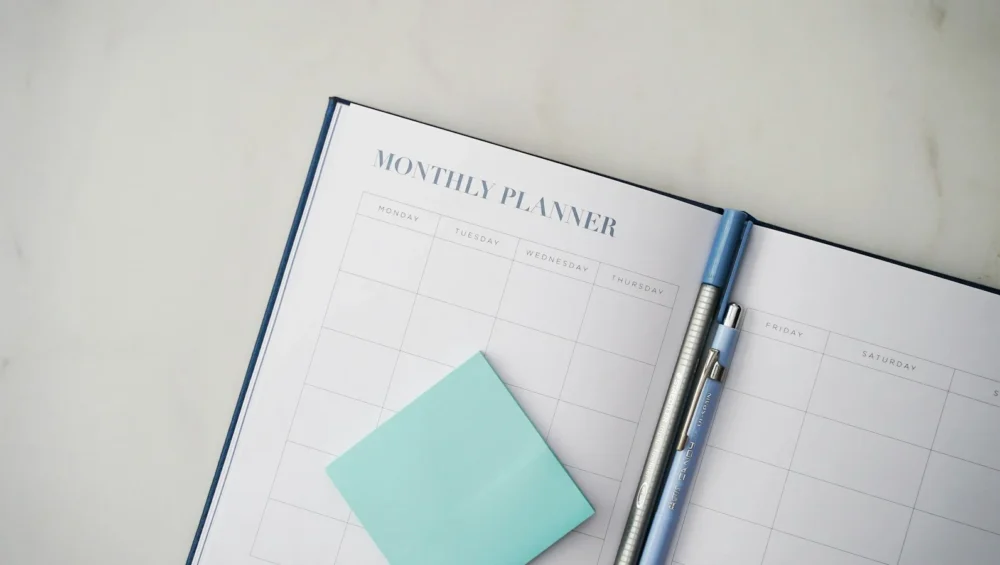
How to make study time table at home begins with a simple list. First write down the hours that are already taken, such as school, meals, prayers and sleep. Then list your subjects and exam dates, divide the free hours among the subjects, and give each block one named task. Add short breaks and a spare “flex” block, follow the plan for a week, and adjust it. This guide from Decent Stationery in Lahore explains each step, with a sample timetable you can copy onto a sheet of paper.
Key Takeaways
- Put fixed commitments in first and study around them, say Southern Cross University and Douglas College.
- Divide the study hours among your subjects, and name the task in every block.
- Blocks of one or two hours are easier to keep than one long evening, says Douglas College.
- Do not cut sleep to fit more in. Children of 6 to 12 years need 9 to 12 hours, says the Cleveland Clinic.
- Test the timetable for a week. Douglas College says to keep adjusting until it works about 80 percent of the time.
What Is a Study Time Table and Why Make One?
Short answer: a study time table is a weekly plan that shows what you will study, when, and for how long.
It turns a vague wish to “study more” into fixed appointments. Study International says consistent planning may help knowledge move into long-term memory and reduce stress. Indiana University names procrastination as a major obstacle and says that committing to a schedule counters it.
How to Make a Study Time Table at Home: Step by Step
Short answer: list fixed hours, list subjects and deadlines, share the free time, name the tasks, add breaks, then test the plan for a week.
Step 1: Write in the fixed activities
Douglas College asks you to begin with commitments that cannot move, such as classes, work, set mealtimes and exercise. Southern Cross University likewise says to block out classes, travel, meals, family time and leisure first, and to be realistic about how long each takes. For a school student in Pakistan we suggest adding school hours, tuition or Quran class, prayer times and the evening meal. This last point is our own suggestion and not from the sources.
Step 2: List your subjects, tests and deadlines
Southern Cross University suggests a term planner that maps every due date and sets a start date for each. Study International likewise says to list exams and assignments, and to block out days you cannot study, such as birthdays or holidays.
Step 3: Decide how much time you have
Short answer: for school children the common rule is about 10 minutes of homework for each grade.
The National Education Association says many districts follow a guideline of 10 minutes per grade level and calls it a good rule of thumb. On that basis a pupil in grade 6 would plan about an hour of homework a night, and a pupil in grade 3 about half an hour. The page adds that it can be modified for particular students or subjects. Revision before a test needs extra time on top.
For college courses the figures are larger. Douglas College plans 2 to 3 hours of study for every 1 hour of class time, and Southern Cross University about 20 hours a week for each unit.
Step 4: Divide the time among your subjects
Southern Cross University says to fill the remaining time with study blocks and divide it equally across your subjects. The Learning Scientists, writing in Tes, suggest rotating between subjects in short blocks. Their example is English, then mathematics, then psychology for 30 minutes each, repeated in turn, in place of a long stretch on one subject.
Step 5: Name the task in each block
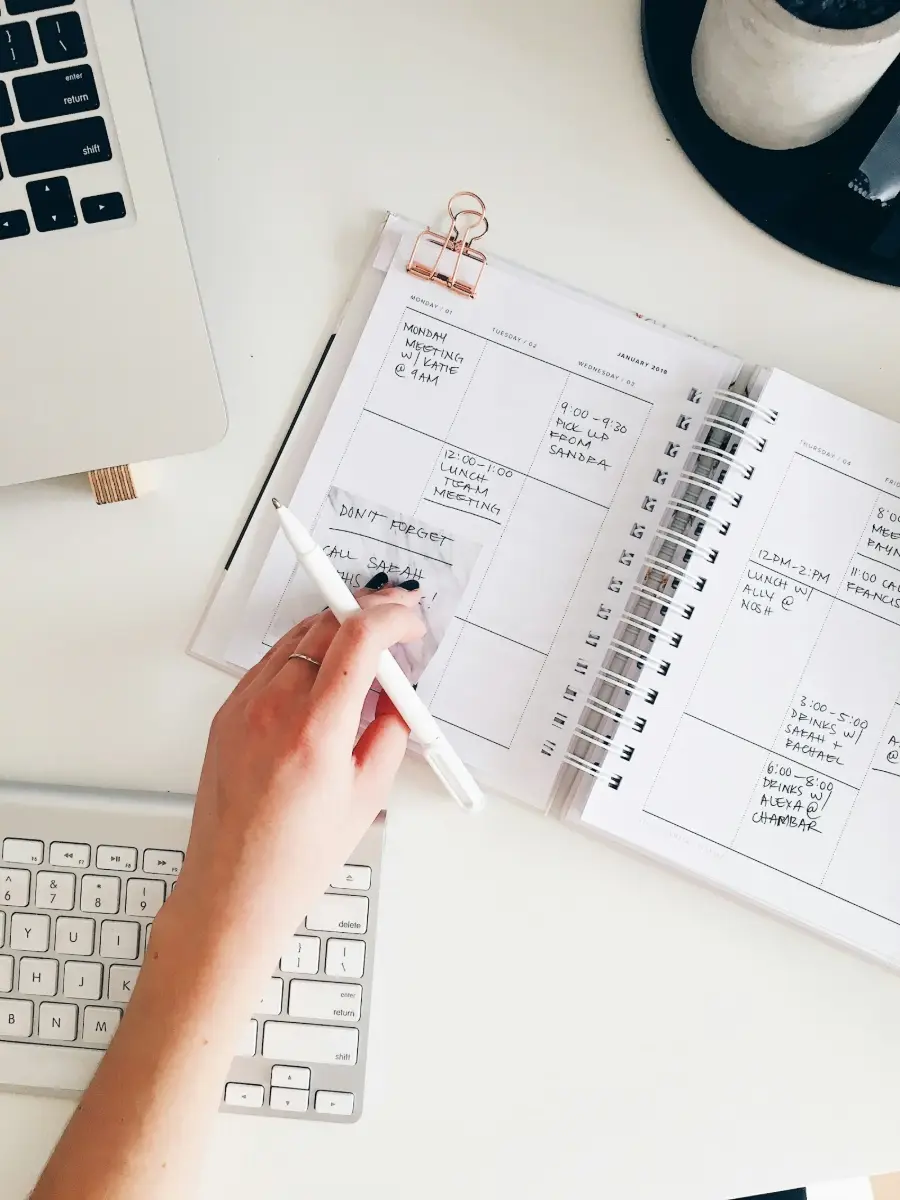
A block labelled “maths” is vague. Southern Cross University says to name each session’s task, such as “doing readings” or “research for assessment”. For a school pupil that may read “solve ten fractions questions” or “learn the spelling list”.
Step 6: Keep the blocks short and add a flex block
Douglas College spreads study across the week in blocks of 1 or 2 hours and repeats the pattern to build routine. It also adds several blocks labelled “Flex” for times when you need extra study.
Step 7: Space the sessions across several days
Short answer: study a subject on different days rather than in one long sitting.
The University of Iowa defines spaced practice as spreading material across multiple sessions, and says that spacing the material at least a day apart benefits learning. It defines massed practice, or cramming, as studying everything in one sitting. Indiana University adds that sessions should be intense but not overly long, with rest between them. It also notes that memory consolidation happens during sleep. So a subject that appears on Monday, Wednesday and Friday is better than three hours on Friday.
Step 8: Test the plan for one week and adjust
Douglas College says to follow the schedule as closely as possible for one week, note where it fails and reward your successes. Each week, make a new copy and adjust the blocks. Keep going until the plan works about 80 percent of the time. If one day falls apart, return to the routine the next day.
A Sample Weekday Time Table for a School Student
This table is our own example for a pupil who finishes school in the afternoon. It is not taken from a source. It uses the 10 minutes per grade rule for a grade 6 pupil and Southern Cross University’s idea of naming each task.
| Time | Activity | Task |
|---|---|---|
| 3:00 to 4:00 pm | Rest, lunch and prayer | No study |
| 4:00 to 4:30 pm | Block 1 | Homework for the subject due first |
| 4:30 to 4:40 pm | Break | Water and a short walk |
| 4:40 to 5:10 pm | Block 2 | Homework for the second subject |
| 5:10 to 6:30 pm | Free time | Play, family or outdoors |
| 8:00 to 8:30 pm | Block 3 (flex) | Revision of a subject not studied today, reading or spelling |
| 9:00 pm | Bedtime routine | Bag packed for tomorrow |
Change the times to suit your school, tuition and family.
How much sleep should the timetable protect?
Short answer: 9 to 12 hours for ages 6 to 12 and 8 to 10 hours for ages 13 to 18.
The Cleveland Clinic gives these ranges and says the American Academy of Sleep Medicine recommends them. It advises setting bedtime by working backward from the wake-up time. It says adequate sleep supports concentration, behaviour and classroom performance in school-aged children.
What Do You Need to Set Up a Study Time Table?
You need very little. A sheet of paper or a notebook for the weekly grid, a pencil so that changes are easy, a few coloured markers to separate subjects and a place to display it. A notebook such as the Narrow Line Spiral Notebook, which has narrow line ruling for more lines per page, suits a weekly grid. For a wall version, a sheet of White Chart Paper takes marker well, and the Dollar Colour Markers Pack of 10 are fibre-tip markers suited to underlining and colouring. Our guide to chart paper decoration ideas for school has ideas for a neat poster.
A Practical Note for Pakistan
A good timetable begins with a good place to study. Choose a quiet corner and keep the timetable where you can see it. Our guide on how to decorate a study table shows how to arrange a desk, and our flash card guide suits the testing part of a study block. A water bottle on the desk keeps you at your table, and the water bottle in Pakistan range is listed on our site. If you want a desk and chair for the room, you can shop study table and chair online at Decent Stationery.
Frequently Asked Questions
Write in your fixed activities, list your subjects and exam dates, divide the free hours among the subjects and name a task for every block. Then test it for a week, as Douglas College advises.
It depends on age. The National Education Association says many districts follow 10 minutes of homework per grade level. College courses need more, and Douglas College plans 2 to 3 hours of study for each hour of class.
Douglas College uses blocks of 1 or 2 hours. The Learning Scientists suggest rotating subjects in blocks of 30 minutes. Younger children may need shorter blocks, which is our own view.
Do not give up. Douglas College says to return to the routine the next day if a day falls apart, and to adjust the plan until it works about 80 percent of the time.
Yes. Indiana University says to leave rest between sessions, and the Cleveland Clinic gives 9 to 12 hours of sleep for ages 6 to 12 and 8 to 10 hours for ages 13 to 18.
Conclusion
A study time table does not need to be clever. List the hours already taken, share the rest among your subjects, give each block a clear task, and protect your sleep. Try it for one week, then change what does not work. You will find notebooks, markers and chart paper at Decent Stationery.
Related Reading
Sources and Further Reading
- Douglas College Library: Creating a Study Schedule
- Southern Cross University: Managing Your Time
- Study International: Step by Step, How to Make a Study Timetable That Works for You
- Indiana University: Creating an Effective Study Schedule
- University of Iowa: Spaced Practice vs Massed Practice
- Tes: Five Tips From Cognitive Psychologists on the Best Ways to Study
- Cleveland Clinic: Recommended Amount of Sleep for Children
- National Education Association: How Much Homework Is Too Much?
About the Author
Written by the Decent Stationery team in Lahore. We sell school, office and art stationery online across Pakistan, including notebooks, markers and chart paper. Study figures come from the linked sources, the sample timetable is our own example, and product details come from our own product pages.