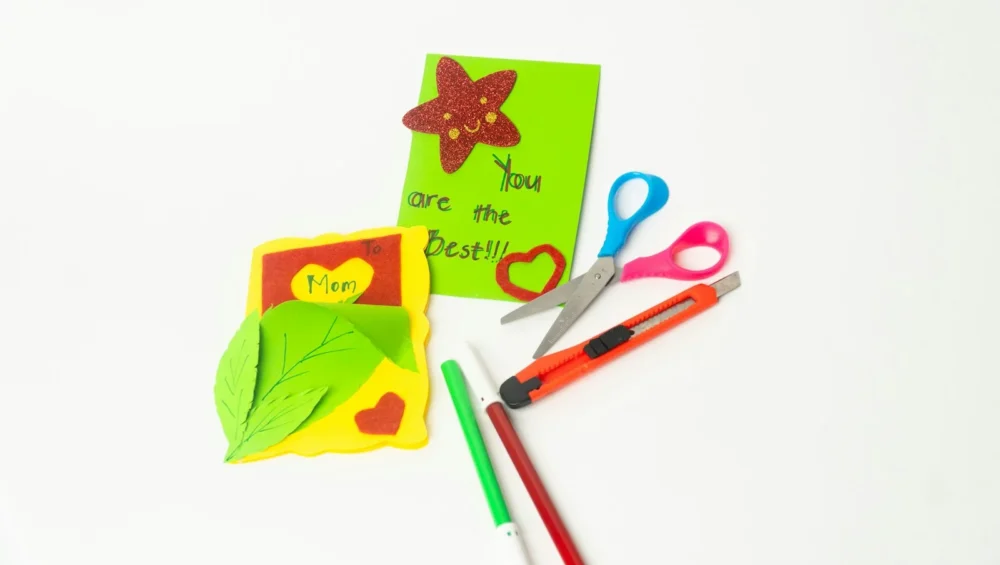
Here is how to make a birthday card. Take a sheet of thick paper, fold it in half and press the crease flat, decorate the front with drawing, stamping or cut paper, and write your message inside. An A4 sheet folded once gives a card about 148 by 210 mm, and the whole job can be done in twenty minutes with scissors and glue. This guide from Decent Stationery in Lahore explains the paper to choose, the size to cut, a plain six-step method, a pop-up variation, and a short history of the birthday card.
Key Takeaways
- Use thick paper for the card base. Altenew, a card-making supplier, names 80 lb to 110 lb cardstock as a heavyweight choice.
- An A4 sheet folded in half makes an A5 card. An A5 sheet folded in half makes an A6 card.
- Press every fold with the edge of a ruler or a spoon, so the crease stays sharp.
- A pop-up card needs only two parallel cuts in the fold and a little glue.
- Make or buy an envelope before you start, because the card must fit it.
What Do You Need to Make a Birthday Card?
Short answer: thick paper, scissors, a glue stick and something to decorate with are enough.
Altenew lists cardstock as the staple paper for cards, with watercolour paper, coloured card and vellum as alternatives. It recommends a tape runner or glue tape because the bond can be lifted and repositioned, and a scoring tool or bone folder with good scissors if you have no scoring board. A bone folder is a smooth flat tool for pressing creases, and the back of a spoon does the same work.
| Item | Purpose | Note |
|---|---|---|
| Thick card or cardstock | Card base | Altenew gives 80 lb to 110 lb as heavyweight |
| Coloured paper | Front panel, shapes | Lighter paper is easier to cut |
| Scissors | Cutting | Sharp points give clean pop-up slits |
| Glue stick or tape | Joining layers | Use little glue to avoid wrinkles |
| Markers or pencils | Drawing and writing | Test pens on a scrap first |
| Ruler | Straight folds | Also useful for pressing creases |
For gluing paper and card, a stick such as the M&G Glue Stick 15g is convenient. Its product page describes the formula as non-toxic, acid-free and washable. For colour, the Dollar Colour Markers Pack of 10 are fibre-tip markers, and the page says they have a locked tip.
How Big Should a Birthday Card Be?
Short answer: fold an A4 sheet for a large card, or half an A4 sheet for a small one.
The international A series is built so that each size is half the area of the one before. Wikipedia’s table of ISO 216 gives A4 as 210 by 297 mm, A5 as 148 by 210 mm and A6 as 105 by 148 mm. The card sizes below follow from that table, so they are our own arithmetic.
| Start with | Fold in half to get | Closed size |
|---|---|---|
| A4 sheet (210 by 297 mm) | A5 card | 148 by 210 mm |
| A5 sheet (148 by 210 mm) | A6 card | 105 by 148 mm |
Altenew also names the A2 card, which measures 4.25 by 5.5 inches (about 108 by 140 mm), as its common size. It adds that an A2 card fits a 4.375 by 5.75 inch envelope. Pick the card size first and then find an envelope to match.
Which paper weight is best?
Altenew says 110 lb is currently the most popular weight and that it is strong enough for card bases and stamping. Its separate paper guide gives roughly 270 to 308 gsm for 110 lb, and calls 80 lb lightweight and easy to fold. In Pakistan paper is usually described in gsm on the pack, so check the label. As a practical rule, thick enough to stand on its own, and thin enough to fold without cracking.
How to Make a Birthday Card Step by Step
Short answer: fold a sheet in half, decorate the front, add a message, and write inside.
These six steps follow the order Altenew gives for a birthday card, with our own notes on folding.
- Cut and fold the base. Cut your sheet to size, for example an A4 sheet. Fold it in half, and run a ruler edge or spoon along the crease.
- Plan the front. Decide on one focal point, such as balloons, confetti or a cake. Altenew advises planning the focal point, the message and any extras before you begin.
- Make the picture. Draw it, stamp it, or cut shapes from coloured paper and glue them on. A smaller panel of coloured paper behind the picture frames it neatly.
- Add the greeting. Write “Happy Birthday” in large letters with a marker, or cut letters from paper.
- Add sparkle. Altenew suggests sequins, ribbons, gems and enamel dots. Small amounts look better than crowded ones.
- Write inside. A handwritten message makes the card personal. Wait until the glue is dry before you close it.
How Do You Make a Pop-Up Birthday Card?
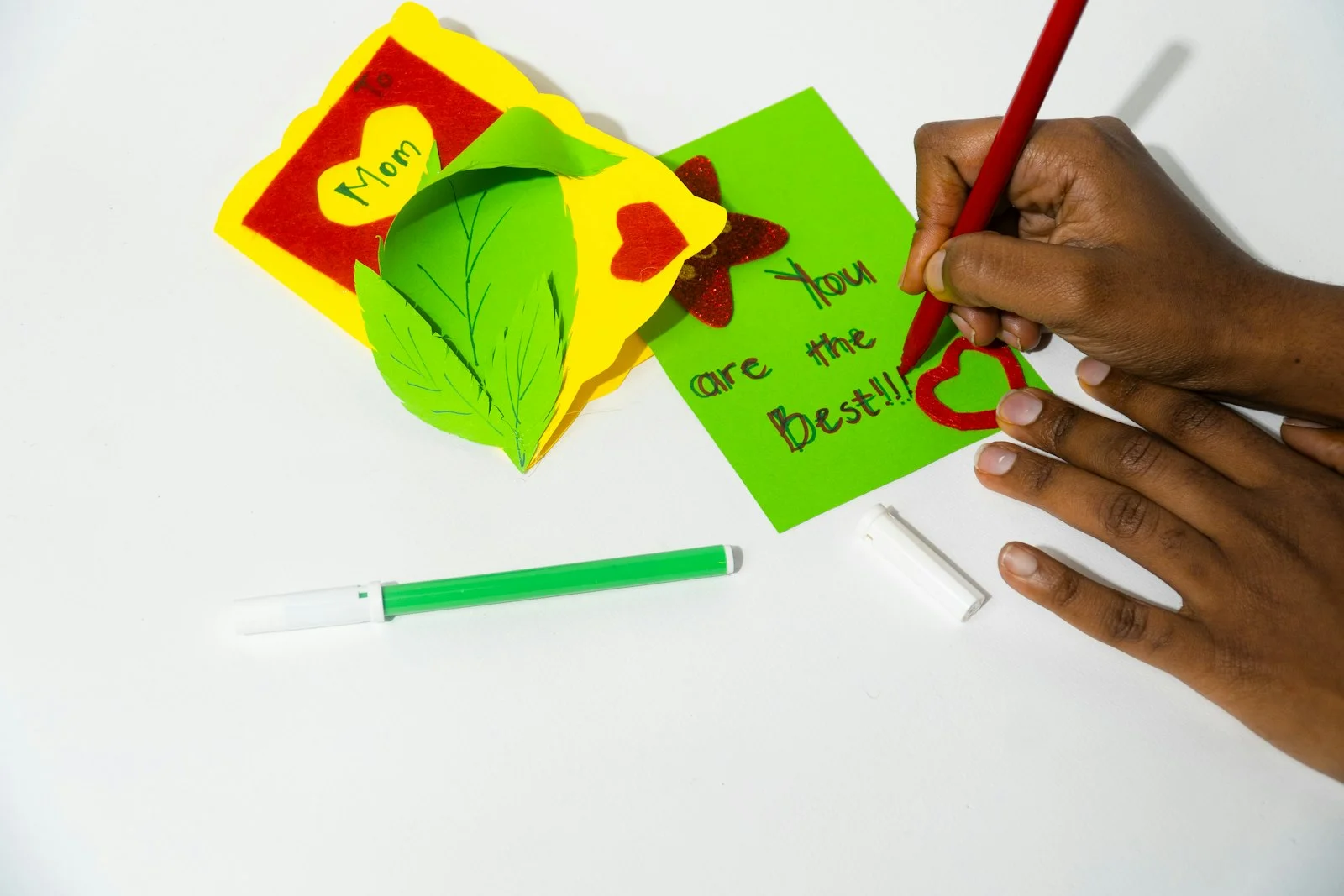
Short answer: cut two parallel slits in the fold, push the strip inward, and glue a shape to it.
Altenew describes the pop-up card in six moves. Start with a top-folding card panel, cut two parallel slits in the fold, and push that section inward. Reinforce the fold with a bone folder, attach a cake, heart or flower, and keep the background plain. Check that the card folds flat and opens into a three-dimensional shape.
Red Ted Art, a children’s craft site, shows a pop-up cake from an A5 sheet of paper and an A6 card. Its four cuts are two long cuts of about 5 cm, one medium cut of about 3.5 cm and one short cut of about 2 cm. You crease along each cut, open the paper and reverse the crease, then glue the sheet into the card one side at a time. The LoveCrafts photo card uses two slits of about 1 inch near the bottom and two of about 2 inches near the top, then glues a cut-out photograph to the lower pop-up piece.
Try one on scrap paper first. The cuts matter more than the decoration.
What Should You Write Inside a Birthday Card?
Keep it short and true. Name the person, wish them a happy birthday, and add one sentence only you could write, such as a shared memory or a wish for the coming year. A line of three or four words is better than a long verse copied from elsewhere.
Common Problems and How to Fix Them
Why does the fold crack or look rough?
The paper is probably too thick, or the fold was not scored first. Altenew recommends a scoring board or a scoring tool before folding. Press a ruler edge along the line, then fold.
Why does the front wrinkle after gluing?
Too much glue wets the paper. Use a thin layer on a glue stick, or switch to double-sided tape, and press the layers flat under a book for a few minutes.
Why will the pop-up not close flat?
The slits are probably uneven or the crease was not reversed. Open the card, reverse the crease on each cut and fold again.
How Do You Make or Choose an Envelope?
Altenew makes its envelope from a square of cardstock 8.5 by 8.5 inches for an A2 card, folded corner to centre and sealed with glue. If you would rather buy one, the Card Envelope Pack of 5 has five envelopes per pack in assorted designs. Its page does not list the envelope dimensions, so measure your card and compare before you buy.
A Short History of the Birthday Card
Wikipedia dates the first published Christmas card to London in 1843, commissioned by Sir Henry Cole. It says better printing, mechanisation and cheaper postage had made cards an affordable form of mass communication by the 1850s. In the 1860s, it says, Hugh Pierce Jr. invented the birthday card, inspired by the Christmas card.
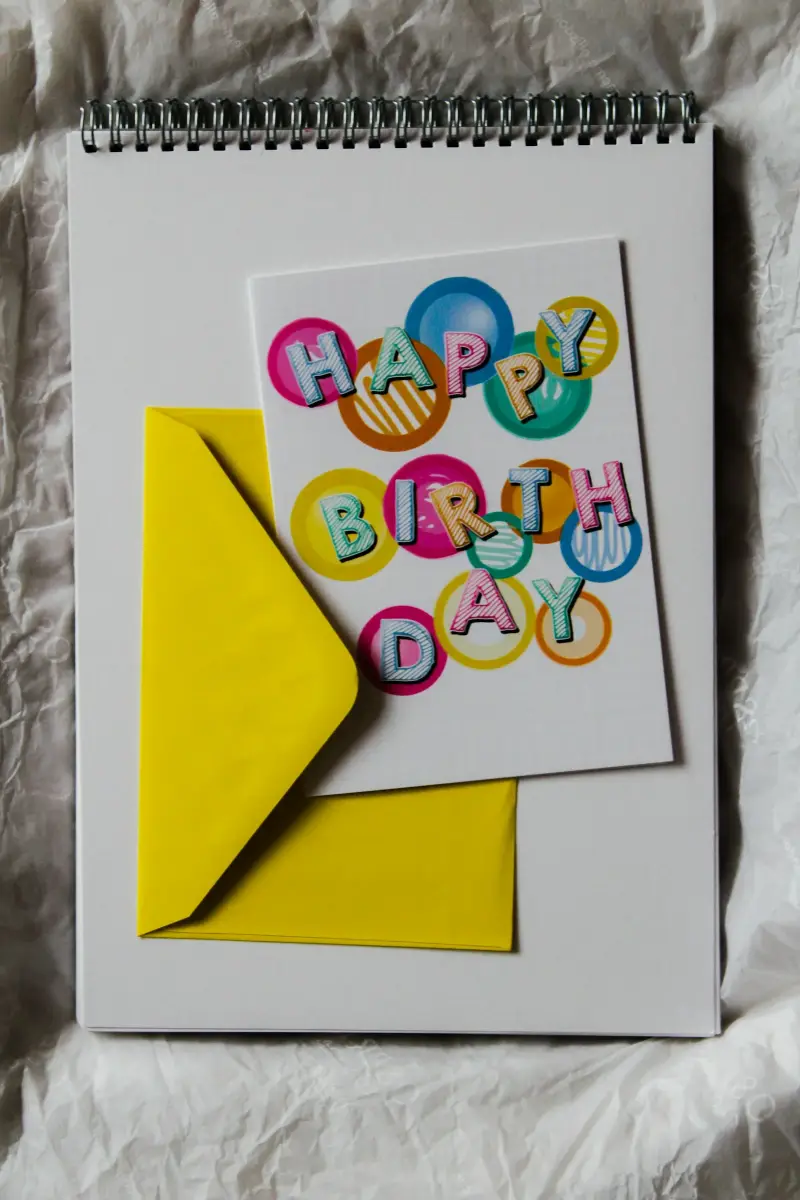
Handmade cards are older than that. The same article records handmade paper valentines exchanged in parts of Europe in the early to mid fifteenth century. A handmade birthday card follows a very old habit.
A Practical Note for Pakistan
A handmade card costs only the paper, glue and a little time, so it suits a child’s gift to a classmate or a note to go with a present. If the party has a cake, the Birthday Party Candles listed by Decent Stationery come in spiral stripe, gold and polka dot styles. You can browse the full birthday candles in Pakistan range, though stock changes. For ready-made cards, see the page on birthday cards price in Pakistan. For wrapping the present, read our guide on how to make a gift bag, our thoughtful stationery gift ideas, and the notes on craft punches, glitter and stencils.
Frequently Asked Questions
Fold a sheet of thick paper in half, press the crease, draw or glue a picture on the front, add the words “Happy Birthday”, and write a message inside. An A4 sheet gives a card of about 148 by 210 mm.
Heavyweight cardstock. Altenew lists 80 lb to 110 lb cardstock for everyday cards and names 110 lb as the most popular weight. Check the gsm figure on your pack.
Common sizes are A5, A6 and the A2 card. An A5 card is 148 by 210 mm and an A6 card is 105 by 148 mm, from the ISO 216 table. Match the card to its envelope.
Fold the card, cut two parallel slits in the fold, push the strip inward and crease it. Then glue a cake or other shape to the strip, as Altenew and Red Ted Art describe.
A simple card takes about twenty minutes. Altenew says a stencilled card with sentiment strips can be made in under 5 minutes, though that needs the right stencil.
Wikipedia credits Hugh Pierce Jr., who invented the birthday card in the 1860s, inspired by the Christmas card. Treat the date as approximate.
Conclusion
A birthday card needs little more than paper, a fold and a careful hand. Choose thick paper, cut it to a standard size, press the crease and keep the design simple. Try the pop-up cake once you are comfortable with the basic card. When you need materials, browse the range at Decent Stationery.
Related Reading
Sources and Further Reading
- Altenew: How to Make a Card, Step by Step Guide
- Altenew: Cardstock Sizes and Paper Weights
- Red Ted Art: Pop Up Birthday Card
- LoveCrafts: How to Make an Awesome Pop-Up Birthday Photo Card
- Wikipedia: ISO 216, paper sizes
- Wikipedia: Greeting card
About the Author
Written by the Decent Stationery team in Lahore. We sell school, office and art stationery online across Pakistan, including craft supplies and gift items. Craft steps, sizes and dates come from the linked sources, and shop details from our own product pages.