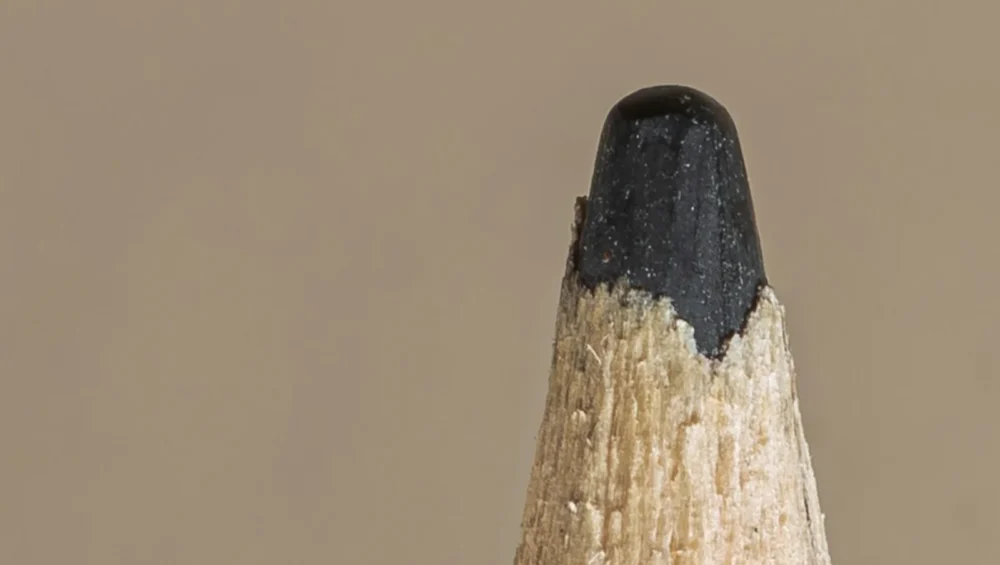
Why is pencil lead called lead? Because the first people to use graphite for writing took it for a kind of lead. A large, very pure graphite deposit was found at Borrowdale in England in the 1560s, and at the time it was thought to be a form of lead ore. The name stuck long after chemists proved that graphite is carbon. A pencil has never contained the metal lead. This guide from Decent Stationery in Lahore traces the name, explains what the core really is, and answers the common safety question.
Key Takeaways
- Pencil “lead” is graphite mixed with clay. It contains no lead metal.
- Graphite was mistaken for lead when it was found at Borrowdale, England, in the 1560s.
- The old name plumbago comes from the Latin word for lead.
- The name graphite was coined in 1789 and comes from a Greek word meaning to write.
- The clay to graphite ratio decides whether a pencil is hard (H) or soft and dark (B).
Why Is Pencil Lead Called Lead?
Short answer: graphite looked like lead ore and was wrongly thought to be a form of lead, so people called it lead and the word stayed.
Encyclopaedia Britannica dates the discovery of an unusually pure graphite deposit in Borrowdale, Cumberland, to 1564. It says that when Conrad Gesner described a graphite writing instrument in 1565, graphite was still thought to be a type of lead. Wikipedia adds that, with chemistry in its infancy, the material was named plumbago, from the Latin for lead ore. Today I Found Out gives the same reason in plain terms, that people simply mistook graphite for a form of lead.
Did the Roman writing stylus play a part?
Possibly, but the sources are not agreed. Some writers link the word to the Roman stylus, a thin rod used for writing without ink, which was sometimes made of lead. Today I Found Out says this explanation is popular but that the real cause was the mistaken identity of graphite. Wikipedia notes only that lead has not been used for writing since antiquity, as in Roman styli. We would treat the stylus as a possible reinforcement of the habit and the mistake as the main cause.
What other names did graphite have?
Before the word graphite came into use, EBSCO’s research starter lists wadd, wadt, kellow, killow, Borrowdale lead and black lead. The Latin word plumbago, “lead ore”, was also used for the mineral.
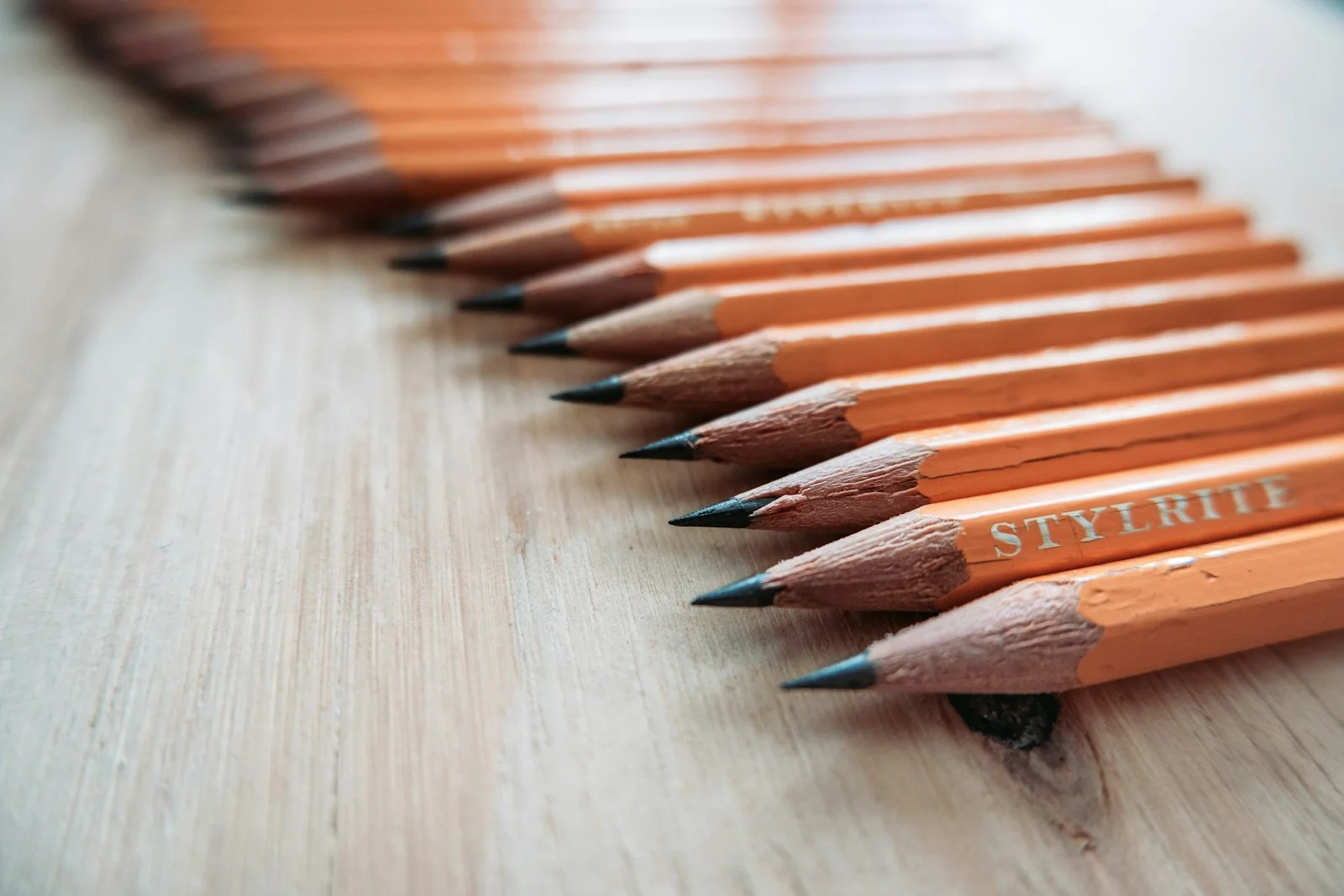
How and When Was Graphite Found at Borrowdale?
Short answer: a very pure deposit near the village of Seathwaite in Borrowdale, Cumbria, came to notice in the middle of the 1500s.
Dates differ a little from source to source, so we give each with its author.
| Year | Event | Source |
|---|---|---|
| 1540 | First documentary evidence of graphite working at Seathwaite | Wikipedia, Borrowdale graphite |
| 1564 | An unusually pure deposit is discovered | Britannica |
| 1565 | Gesner describes a graphite pencil in a wooden holder | Britannica |
| 1565 | Elizabeth I brings German workers to mine the graphite | EBSCO |
| 1778 and 1779 | Carl Wilhelm Scheele shows graphite is a different mineral from galena and molybdenite, and then a form of carbon | Wikipedia (Graphite) and Britannica |
| 1789 | Abraham Gottlob Werner names it graphite | Wikipedia (Graphite) |
Wikipedia says the deposit was so pure and soft that it could be sawn into sticks, and that locals used it to mark sheep. It also records that the Crown controlled the mine closely because the graphite lined the moulds for cannonballs. Britannica says the discovery made the modern pencil possible.
What Is Pencil Lead Really Made Of?
Short answer: a mixture of graphite and clay, baked hard. There is no lead metal in it.
Graphite is a crystalline form of carbon. Wikipedia describes it as many stacked layers of carbon atoms in a honeycomb pattern, held together only weakly, so the layers slide over one another. It gives graphite a Mohs hardness of 1 to 2, which helps explain how it leaves a mark on paper.
Pure graphite is brittle. EBSCO says the earliest pencils used plumbago usually mixed with clay to stabilise it. Wikipedia credits Nicolas-Jacques Conté with mixing powdered graphite with clay in 1795, forming rods and firing them in a kiln, and says Joseph Hardtmuth, who founded Koh-I-Noor, reportedly found a graphite and clay method earlier, in 1790. Faber-Castell states that its graphite pencil leads are a mixture of graphite and clay.
How does the mix decide hard or soft?
Faber-Castell explains that the greater the graphite, the softer the lead, and the more clay, the harder the lead. Britannica adds that darkness depends on how many graphite particles the pencil deposits, and that hardness reflects how well the lead resists abrasion by the paper fibres.
| Degrees | Character | Suggested use (Faber-Castell) |
|---|---|---|
| 3B to 8B | Softer and darker | Artistic drawing |
| H, F, HB, B, 2B | In between | Drawing and writing |
| 2H to 6H | Harder and lighter | Technical drawing |
Faber-Castell reads B as soft black, HB as hard black, H as hard and F as firm. Faber-Castell says the scale has been unchanged since 1910, with 19 degrees in its range from 14B to 6H. Wikipedia notes that HB is the standard writing grade and that grading is not standardised across makers, so an HB from one brand can differ from another.
Is There Really Lead in a Pencil?
Short answer: no. Pencils have never contained lead.
MedlinePlus, a service of the United States National Library of Medicine, says that despite common belief, pencils have never contained lead. It calls graphite relatively nonpoisonous. The symptoms it lists after swallowing pencil pieces, such as stomach pain, vomiting or choking, point to a blockage or an airway problem and not to poisoning. For advice, it says to contact poison control.
Where did the lead poisoning worry come from?
Wikipedia explains that pencil-related lead poisoning came from the outer paint, which could hold high lead levels until the middle of the twentieth century, and which was swallowed when pencils were chewed. The graphite itself is not poisonous.
Do other languages say lead as well?
Wikipedia notes that the German word for pencil, Bleistift, and words in some other languages mean lead pen. So English is not alone in the habit.
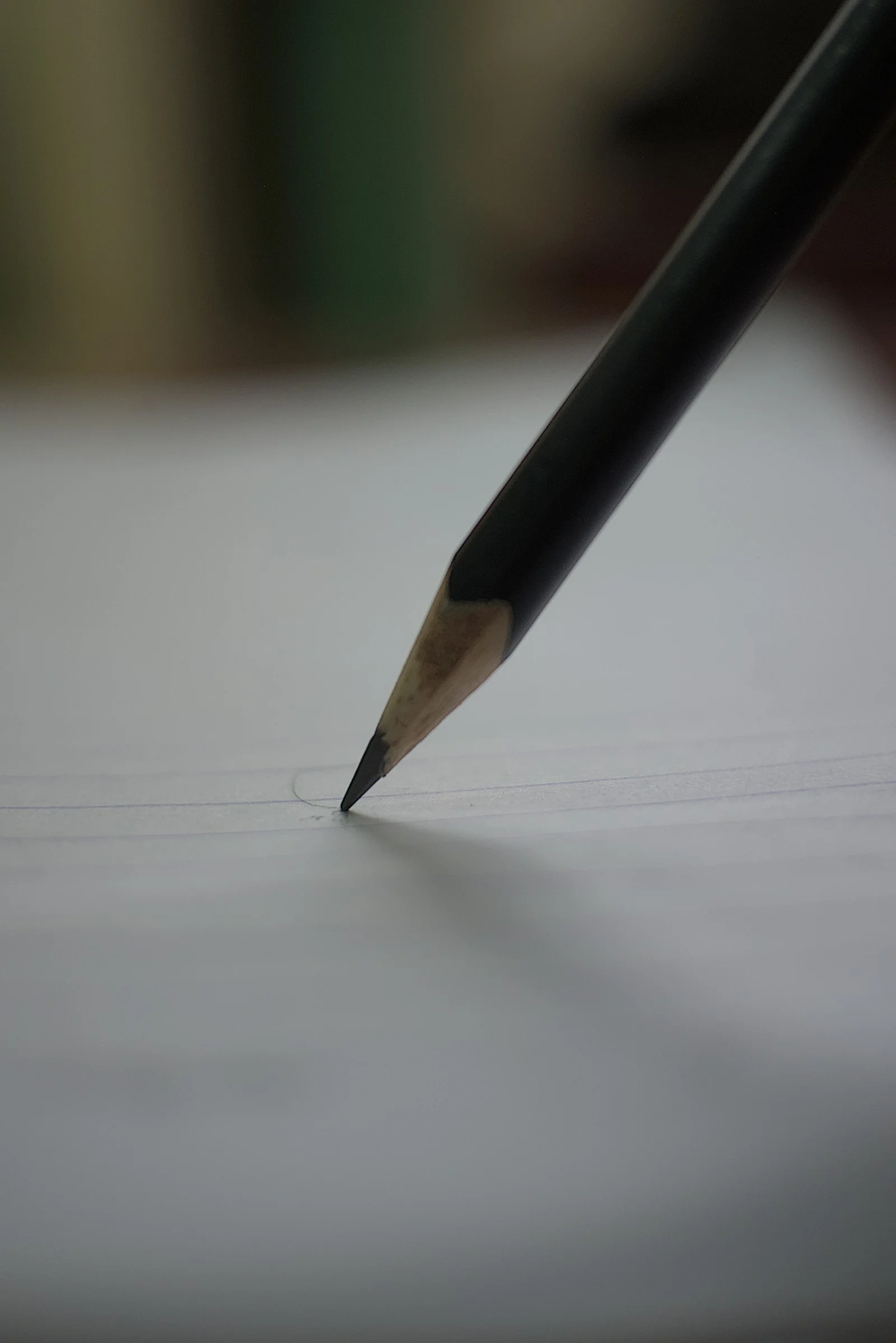
Why Do Mechanical Pencils Also Have “Lead”?
Short answer: the word now simply means the writing core, whatever it is made of.
Mechanical pencil refills are still sold as leads. The Senja MEC Mechanical Pencil Lead listed by Decent Stationery is sold in HB with 0.5 mm and 0.7 mm diameters, and its product page says 0.5 mm gives a finer line while 0.7 mm is sturdier and less prone to snapping. The page does not state what the lead is made from.
Lead Pencils in Pakistan
Short answer: Decent Stationery lists wooden graphite pencils under the heading lead pencils, so the old name is still in daily use.
Two products show the usual range. The Faber-Castell Lead Pencil is a pack of 12 in grade 2½/HB graphite, with a black hexagonal wooden barrel and an eraser tip. The Goldfish Autocrat HB Lead Pencils come in a pack of 12 with a wood-cased barrel and are suited to everyday writing and exams, according to the product page. You can see the full list under buy lead pencil in Pakistan, though stock changes.
For care of the point, read our guide on how to sharpen a pencil without breaking the lead. To see how the pink end works, read how are erasers made. Artists who want to pick pencil grades by use can also read our fine art supplies guide. For bold colour work beside the pencil, see our markers category.
Frequently Asked Questions
Because graphite was mistaken for lead when it was found at Borrowdale in the 1560s. Britannica says graphite was then thought to be a type of lead, and the name outlived the mistake.
No. MedlinePlus says pencils have never contained lead. The core is graphite, a form of carbon, usually mixed with clay.
Graphite and clay, according to Faber-Castell. The ratio sets the hardness, and Wikipedia says the rods are fired in a kiln.
The name comes from the Greek word graphein, to write. Abraham Gottlob Werner coined it in 1789, says Wikipedia.
It is the grade most often used for writing. Faber-Castell reads HB as hard black, and Wikipedia calls HB the standard writing grade. Wikipedia adds that Koh-I-Noor claims H stood for Hardtmuth and B for Budějovice, so the letters have more than one explanation.
Graphite is relatively nonpoisonous, says MedlinePlus, but pieces can cause choking or a blockage. Contact poison control if a piece is swallowed. Older painted pencils may have contained lead in the paint, says Wikipedia, so a chewed pencil is best avoided.
Conclusion
Pencil lead is called lead because of a sixteenth century mistake that the name never corrected. The core is graphite and clay, the only lead near old pencils was in some of their paint, and the clay to graphite ratio is what gives each pencil its grade. A good habit is to check the letter and number on the barrel before you buy. You can see the grades we stock at Decent Stationery.
Related Reading
- Who Invented the Pencil Sharpener? A Short History
- How Do Gel Pens Work? The Ink, the Ball and the Science
- How to Shade With Colored Pencils
Sources and Further Reading
- Encyclopaedia Britannica: Pencil
- Wikipedia: Pencil
- Wikipedia: Graphite
- Wikipedia: Borrowdale graphite
- MedlinePlus: Pencil lead poisoning
- Faber-Castell: Graphite Pencil Degrees of Hardness Explained
- EBSCO Research Starters: Invention of the Lead Pencil
- Today I Found Out: Why Pencil “Lead” is Called “Lead”
About the Author
Written by the Decent Stationery team in Lahore. We sell school, office and art stationery online across Pakistan, including pencils, erasers and sharpeners. Historical facts and dates come from the linked sources, and product details from our own product pages.