A fountain pen writes without any pushing or shaking, and the ink never seems to run out mid-word. So how do fountain pens work? The answer lies in a small group of parts that move ink from a reservoir to the paper using gravity and a force called capillary action. This guide explains each part in plain words. Decent Stationery in Lahore sells fountain pens in Pakistan for students, teachers and writers.
Key Takeaways
- A fountain pen has a reservoir that holds ink, a feed that carries it and a nib that touches the paper.
- Ink moves down the feed by gravity and capillary action, while air moves up to replace it.
- This steady exchange gives a smooth flow without blotting.
The main parts of a fountain pen
The Wikipedia article on fountain pens describes how a pen draws ink from a reservoir through a feed to the nib. Here are the parts in plain words:
- Reservoir: holds the ink. It can be a cartridge, a converter or a built-in tank filled by a piston.
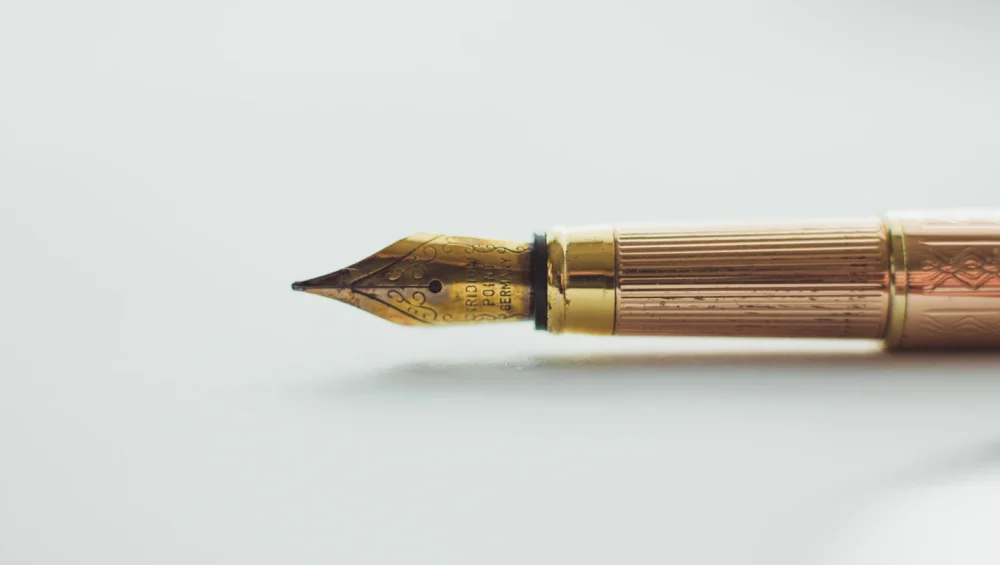
- Nib: the metal tip that touches the paper. It has a thin slit cut down its middle.
- Feed: the part under the nib with narrow channels. It carries ink to the nib and lets air flow back up to the reservoir.
- Fins in the feed: many feeds have finned structures that catch and hold a small overflow of ink, so the pen is less likely to blob or drip.
- Section and barrel: the parts you hold.
How the ink moves
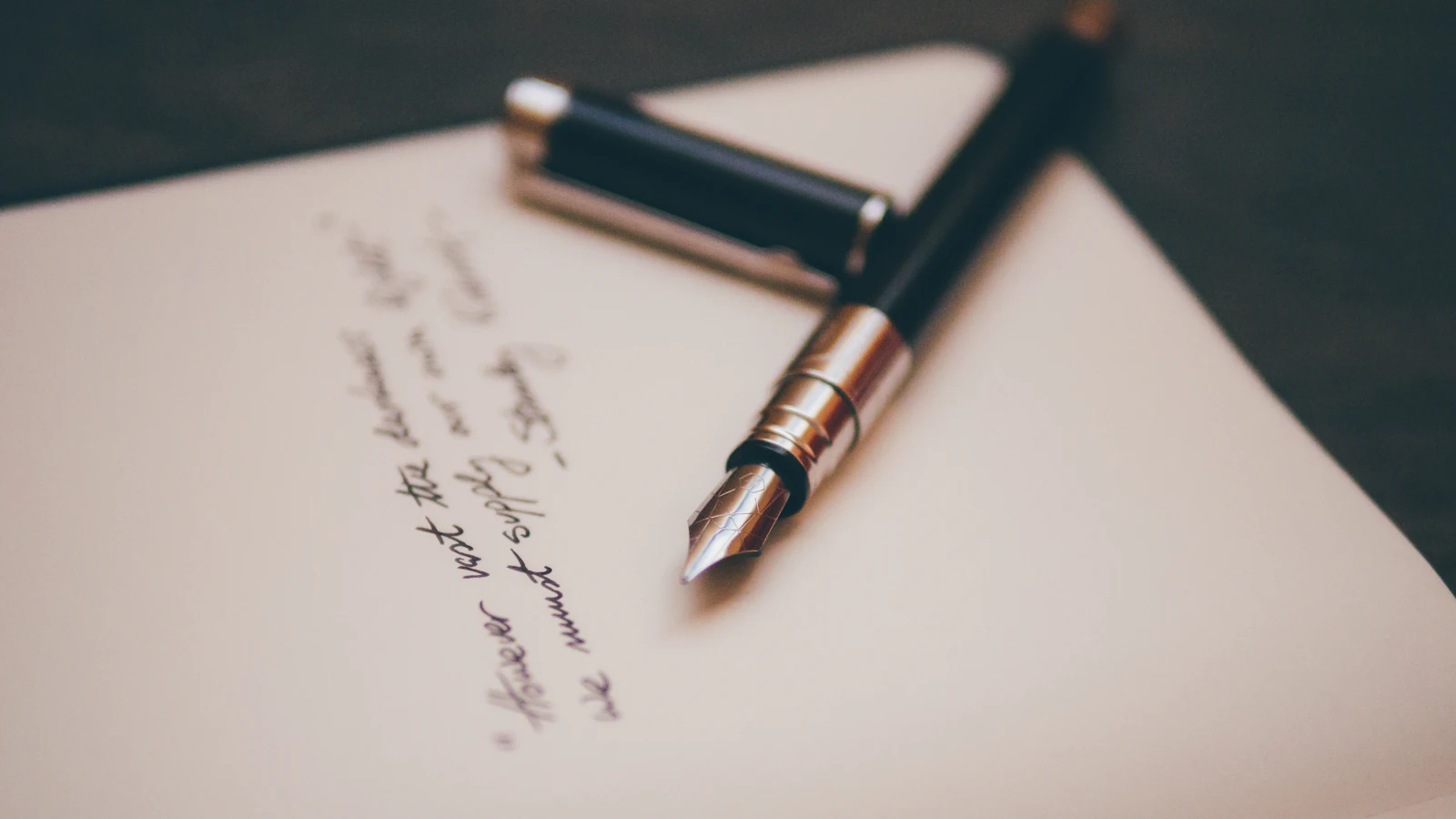
When the nib touches the paper, ink travels from the reservoir down the feed to the nib. Two forces help it. Gravity pulls the ink downward. Capillary action, the same force that draws water into a narrow tube or a paper towel, pulls ink along the narrow channels of the feed and through the slit in the nib. Wikipedia says the pen deposits ink on paper through a combination of gravity and capillary action.
At the same time, air must go the other way. As ink leaves the reservoir, air flows up through the feed to take its place, in an even exchange of volumes. Without this air, the ink would struggle to flow. For the history of how these pens developed, read our guide on who invented the fountain pen.
Why the nib has a slit
The slit divides the nib into two halves. It carries ink down to the tip by capillary action, so the ink is held in place when you lift the pen and flows when the tip meets paper. Wikipedia also notes that the length of the tines affects how flexible a nib is. This is why a fountain pen needs only a light touch.
What ink to use
Fountain pens work best with ink made for them. Wikipedia says that modern fountain pen ink is almost exclusively dye-based because pigment particles usually clog the narrow passages. It also says that normal India ink would quickly clog a fountain pen, and that iron gall ink can corrode a pen. For a longer guide, see which ink is best for a fountain pen.
Different ways to fill a pen
- Cartridge: a sealed tube of ink you push into the pen.
- Converter: a refillable tube that fits the same socket as a cartridge. You draw ink from a bottle.
- Piston filler: a built-in tank filled by turning a knob.
Wikipedia notes that screw-mechanism piston fillers were made as early as the 1820s, and that the popularity of the modern piston filler begins with the Pelikan of 1929. It also says the Waterman C/F of 1953 brought cartridge filling to the attention of the international market. For filling instructions, see how to fill ink in a fountain pen.
Troubleshooting common problems
These are common tips and not taken from a published source, so follow your pen maker’s advice first.
- Pen skips or does not start: the feed may be dry or the nib may be blocked. Flush the pen with clean water.
- Pen leaks or blobs: the pen may be overfilled, or the ink may be too wet for the paper.
- Scratchy writing: the nib may be misaligned. Do not bend it. Ask the maker or seller for advice.
- Hard starts after storage: ink may have dried inside. Rinse and refill.
If you hold your pen too flat or too upright, the flow may also change. Try holding it at a comfortable angle with a light grip.
Fountain pens at Decent Stationery
Browse the full fountain pen collection, including the Piano fountain pen and the Pelikan Junior fountain pen. You can buy a fountain pen online in Lahore and across Pakistan. Check each product page for the filling system, nib type and current price.
Nib sizes and what they mean for your writing
Fountain pen nibs come in different widths. The names vary a little between makers, but the idea is the same.
- Fine: makes a thin line, good for small handwriting and for notes on thin paper.
- Medium: a balanced line that suits most people for everyday writing.
- Broad: a thick line that shows off the ink color and suits larger handwriting or signatures.
A wider nib puts more ink on the paper, so it needs more drying time and better paper. If you are buying your first pen, a fine or medium nib is an easy place to start. Nib widths are not standard across brands, so check the description on each product page.
How to hold and use a fountain pen
A fountain pen works best with a light touch. Follow these steps for smooth writing.
- Hold the pen near the grip section, not near the end of the barrel.
- Keep the nib at a gentle angle to the paper, with the slit facing up.
- Let the weight of the pen do the work. Do not press down.
- Write at a steady speed. Writing too fast can make the ink skip, and writing too slowly can leave blobs.
- Cap the pen when you finish, so the nib does not dry out.
If you have just changed from a ballpoint, expect to feel the difference for the first few days. Your hand will adjust.
For left-handed writers
Left-handed writers often smudge ink as the hand moves over wet lines. A few habits can help.
- Choose a fine nib and ink that dries quickly.
- Use paper that absorbs ink well so the line dries soon.
- Hold the pen a little further back and write with the paper turned slightly.
- Place a sheet of scrap paper under your hand.
Every hand is different, so try several settings until you find what works.
A simple cleaning routine
A clean pen writes better and lasts longer. Clean it when you change ink or if it has not been used for some time.
- Remove the cartridge or empty the converter.
- Hold the nib section under slow running water, or dip it in a small cup of clean water, until the water runs clear.
- Gently dry the outside with a soft cloth.
- Leave the pen to dry with the nib pointing down on a tissue.
- Refill when it is fully dry. Our guide on which ink is best for a fountain pen can help you choose.
Is a fountain pen worth it for students?
Many students find that a fountain pen makes handwriting neater, because the pen asks for a gentle grip and a steady pace. It can also feel more relaxing for long writing sessions. On the other hand, it needs a bit more care than a ballpoint, and it may not suit crowded exam halls where you cannot spare time for refills. The best advice is to try one in daily homework first. If it suits you, bring it to class. Check your school or exam rules about which pens are allowed in the exam hall.
Frequently Asked Questions
Ink flows from a reservoir through a feed to the nib, helped by gravity and capillary action. Air moves up to replace the ink that leaves.
Capillary action pulls the ink along the feed and through the slit in the nib, so you only need a light touch.
It is the part under the nib with narrow channels that carries ink to the nib and lets air flow back.
A converter is a refillable ink tube that fits in place of a cartridge, so you can fill the pen from a bottle.
No. Use ink made for fountain pens. Marker ink, India ink and some pigment inks can clog the pen.
Decent Stationery lists fountain pens online from Lahore. Check each product page for the pen type and current price.
Conclusion
Once you know the parts, a fountain pen feels less mysterious. Fill it with the right ink, hold it lightly and let capillary action do the work.
Related Reading
Sources and Further Reading
- Wikipedia: Fountain pen (ink flow, feed, nib, filling systems)
- Troubleshooting, nib size, left-handed and student tips are our own general advice.
- Product details come from the Decent Stationery product pages.
About the Author
Written by the Decent Stationery team in Lahore. We sell school, office and art stationery online across Pakistan, including fountain pens and ink. The mechanism points come from the Wikipedia article listed above, and product details come from our own product pages.