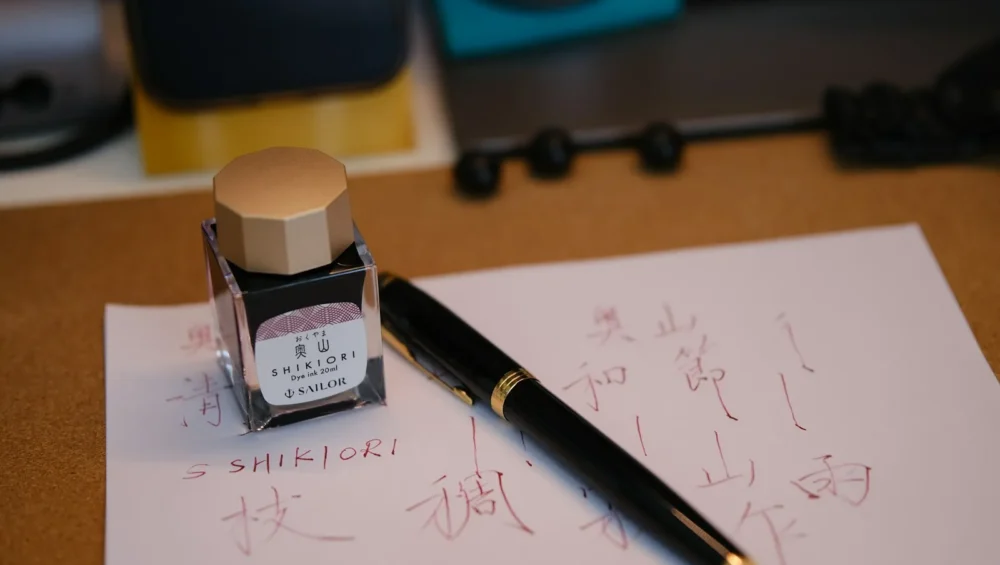
To fill ink in a fountain pen, unscrew the barrel, fit a converter to the grip section, press out the air, and submerge the whole nib in the ink bottle. Turn the knob to draw ink up, wipe the nib clean, and screw the barrel back on. A cartridge pen is simpler: push a new cartridge onto the inner tube until it clicks. This guide from Decent Stationery explains each method in order.
Key Takeaways
- Converters let you use bottled ink. Cartridges are sealed and simpler.
- Press the air out of the converter before the nib goes into the ink.
- Cover the nib and the small breather hole completely in the bottle.
- Wipe the grip and nib after filling to avoid ink on your fingers.
- Beginners should start with dye-based ink, which is easiest to clean.
What You Need Before You Start
Preparation takes only a minute and prevents most spills. You need a fountain pen, a bottle of ink, a lint-free cloth or tissue, and a small piece of scrap paper. Work over a table covered with newspaper or a sheet of plain paper, because ink stains cloth and wood quickly. If you are new to fountain pens, our guide on how to remove ink stains from clothes is worth keeping nearby.
First decide which filling system your pen uses. Most school and office pens take either a cartridge or a converter. A smaller number have a piston built into the barrel. The table below compares the three.
| Filling method | Ink source | Best for | Main caution |
|---|---|---|---|
| Cartridge | Sealed, disposable ink tube | Beginners, travel, school bags | Fewer colour choices |
| Converter | Bottled ink | Wider choice of colours, lower running cost | Must fit your pen and seat fully |
| Built-in piston | Bottled ink | Long writing sessions | Harder to clean and not meant to be taken apart |
How to Fill Ink in a Fountain Pen With a Converter
Short answer: remove the barrel, attach the converter, expel the air, dip the nib fully into the ink, and turn the knob to draw the ink up.
Step 1: Open the pen and attach the converter
Remove the cap and unscrew the barrel from the grip section. If a cartridge is fitted, pull it off. Push or screw the converter onto the grip, depending on the design of your pen. Make sure it is seated all the way, because a loose converter can leak.
Step 2: Expel the air
Turn the knob so that the piston moves to the nib end of the converter. This pushes out the air inside. The Online Pen Company advises doing this first, because trapped air can dry out the ink and clog the feed.
Step 3: Submerge the nib
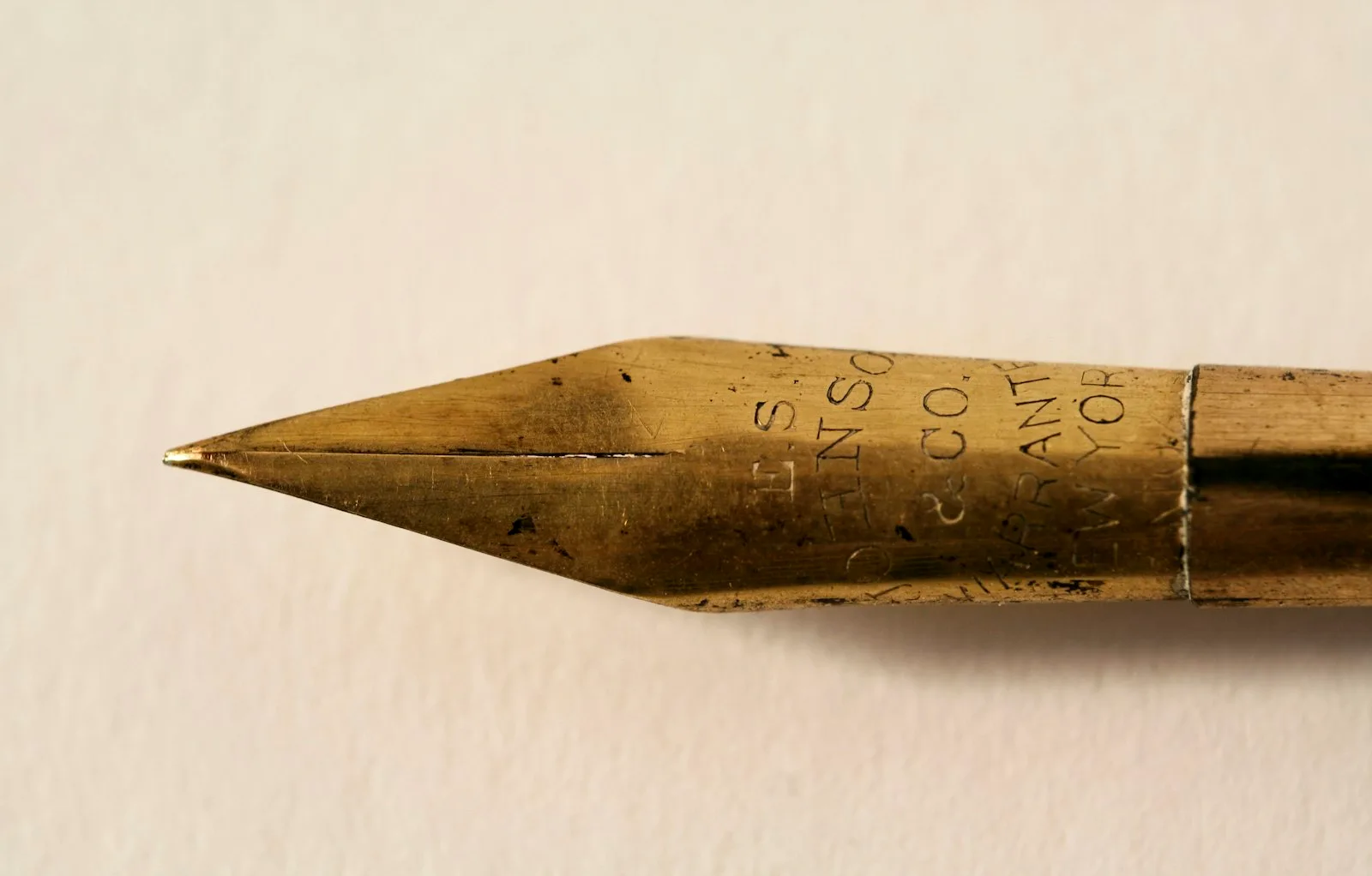
Lower the nib into the bottle until it covers the breather hole, the small opening in the middle of the nib. The Online Pen Company and Pen Boutique both give this as the correct depth. Keep the section of the pen above the ink so that the grip stays clean.
Step 4: Draw up the ink
Turn the knob the other way, slowly, until the converter fills. Lift the pen out and turn the knob back a little until a small drop forms at the tip. This removes excess ink and reduces the chance of a blot on your first line.
Step 5: Remove air bubbles and wipe the nib
If a bubble sits at the top of the converter, point the nib upward and push the ink back until the bubble clears. Fill again. Wipe the nib and grip with a lint-free cloth. Pen Boutique also notes that Pelikan suggests letting three to five drops flow back into the bottle after filling, to avoid a wet, dripping line.
Step 6: Reassemble and test
Screw the barrel back on, cap the pen, and test it on scrap paper. Recap the ink bottle at once so that the ink does not evaporate or spill.

How to Fill a Fountain Pen With a Cartridge
Short answer: separate the grip from the barrel, press the cartridge onto the inner tube until it clicks, and reassemble.
Unscrew the barrel. Take the new cartridge and press it firmly onto the small tube in the grip so that the seal is pierced. You should feel it click into place. Screw the pen together and hold it with the nib pointing down for a few minutes. If it does not write at once, wait a little longer before trying again.
How to Fill a Piston-Filler Fountain Pen
A piston filler has a knob at the end of the barrel. Hold the nib in the ink, turn the knob to draw ink into the barrel, and wipe the nib. According to Pen Boutique, Pelikan introduced the built-in piston design in 1929, and it works in much the same way today. Because the whole barrel holds ink, these pens carry far more than a cartridge. Clean them by drawing plain water through the pen until it runs clear, and do not disassemble them unless the maker allows it.
Which Ink Should You Choose?
The ink matters as much as the filling method. Dayspring Pens, a specialist retailer, describes three common families.
- Dye-based ink dissolves in water, leaves no sediment, and rinses out easily. It is the most common and least costly type, but it is not waterproof.
- Pigment ink holds fine particles in suspension. It resists fading and water, but the particles can settle and clog the feed, so the pen needs regular cleaning.
- Iron gall ink darkens as it dries and becomes water resistant. It is acidic, so it should only go in a pen that you use often and rinse regularly.
For students, dye-based ink is the sensible choice. You can browse fountain pen ink in Pakistan on our shop, including Pelikan 4001 Fountain Pen Ink in Brilliant Black. If you also need a pen, see our range to buy a fountain pen online.
Common Problems After Filling
Why will my pen not write after filling?
Air in the feed is a common cause. Hold the pen upright with the nib pointing down and wait a few minutes. The Journal Shop advises waiting longer if the ink does not flow at first. If it still fails, rinse the pen with clean water and fill it again.
Why does the pen leak?
Check that the converter is fully seated and that the barrel is screwed on firmly. Pen Boutique stresses that a converter must seat fully to prevent leaks, and that it does not need to be filled to the top.
What if I make a mistake on the page?
Fountain pen ink is difficult to erase, so write slowly while you learn. If you need to cover a slip on a rough copy, read how to use a correction pen for the basics.
A Practical Note for Pakistani Students
A cartridge pen is the simplest choice for younger children because there is no bottle to spill in the classroom. Pen Boutique notes that a converter costs less over time and opens up more ink choices, which suits older students who write a great deal. Pens such as the Pelikan Junior Fountain Pen P67 are designed for learners, while the Lamy Safari Fountain Pen suits those who want a sturdier pen. Keep a sharpened pencil ready as well. Our article on how to sharpen a pencil without breaking the lead explains how.
Caring for Your Pen After Filling
Good care keeps a fountain pen writing for years. Store it with the cap on, laid flat or nib up. Use it regularly so that the ink does not dry in the feed. When you change to a different ink, flush the pen with plain water until it runs clear, then dry the nib gently. Never leave iron gall ink in a pen that you rarely use.
Frequently Asked Questions
Often yes, but only if a converter made for your pen fits. A converter is a small refillable reservoir that replaces the cartridge. Check the pen maker’s guidance before buying one, because converters are not always interchangeable.
Ink usually begins to flow within a few minutes if you hold the pen upright with the nib pointing down. One guide suggests leaving the pen nib down for about 15 minutes, and longer if needed, before testing it on scrap paper.
No. A partly filled converter writes just as well and is easier to empty when you change ink. Pen Boutique notes that a converter does not need to be completely full.
It is best not to. Clean the converter and pen thoroughly with clean water before switching to another ink, so that the two formulas do not react or clog the feed.
Dye-based ink is the usual advice for beginners. It dissolves in water, rarely clogs the pen, and rinses out easily, although it is not waterproof.
The most common cause is a converter or cartridge that is not fully seated. Press it in until it clicks or screw it on firmly, wipe the nib and grip clean, and keep the pen upright when carrying it.
Conclusion
Filling a fountain pen is a short routine once you know the steps. Expel the air, submerge the nib to the breather hole, draw up the ink, wipe the pen, and test it on scrap paper. Choose dye-based ink while you learn, and rinse the pen when you change colours. When you are ready to buy, visit Decent Stationery to see our fountain pens and inks, or start with the fountain pen ink collection.
Sources and Further Reading
- Pen Boutique: A Guide to Fountain Pen Filling Mechanisms (Part One)
- Levenger: How to Fill a Fountain Pen
- The Online Pen Company: Filling a Fountain Pen
- Dayspring Pens: The Ultimate Guide to Fountain Pen Inks
- The Journal Shop: How to Fill a Fountain Pen
About the Author
Written by the Decent Stationery team in Lahore. We sell school, office and art stationery online across Pakistan, including fountain pens and fountain pen ink. Product details in this guide come from the manufacturers and retailers linked above.