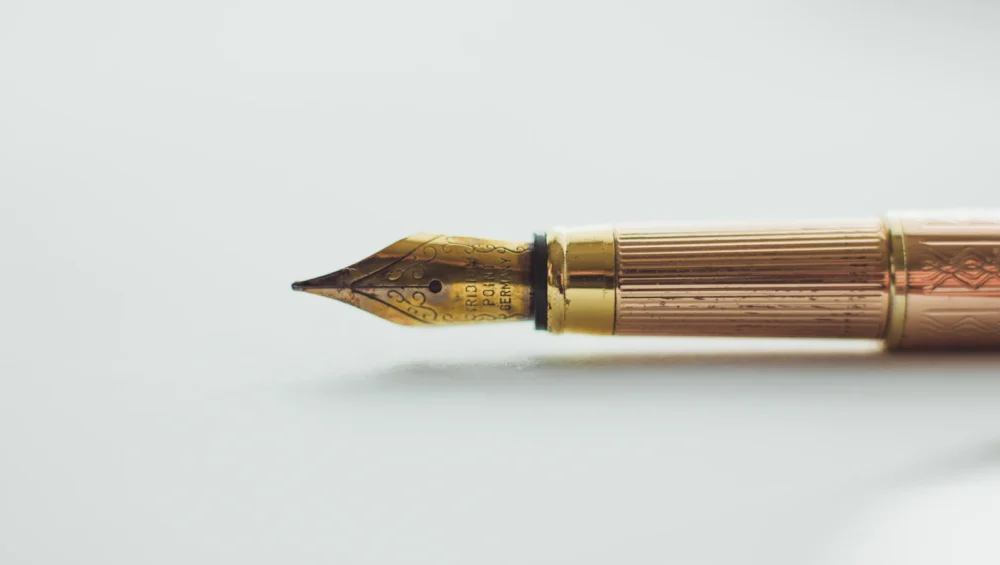
Ask who invented the fountain pen and you will hear more than one name. The idea of a pen that carries its own ink is old, and many inventors worked on it. The person most often credited with the practical modern pen is Lewis Waterman, who received a US patent in February 1884. This short history explains what came before him, what he changed and how the pen developed afterwards. Decent Stationery in Lahore sells fountain pens in Pakistan for students and handwriting lovers.
Key Takeaways
- No single person invented the fountain pen. Efficient designs came from several inventors between the 1850s and the 1880s.
- Lewis Waterman is credited with the practical free-flowing ink feed. His US patent number 293,545 is dated 12 February 1884.
- Cartridges arrived in the 1950s, and piston fillers had been made far earlier.
Who invented the fountain pen? The short answer
The History of Information site notes that efficient fountain pens were developed in several places, by several different inventors, from the 1850s through the 1880s. Lewis E. Waterman is credited there with the free-flowing ink mechanism, which uses capillary action and air to give a steady, even flow of ink. The site lists his US patent as number 293,545, granted in February 1884. Explain that Stuff gives the same patent number and the exact date, 12 February 1884.
So the honest answer is a shared one. Many people improved the idea, and Waterman made it dependable.
What came before Waterman
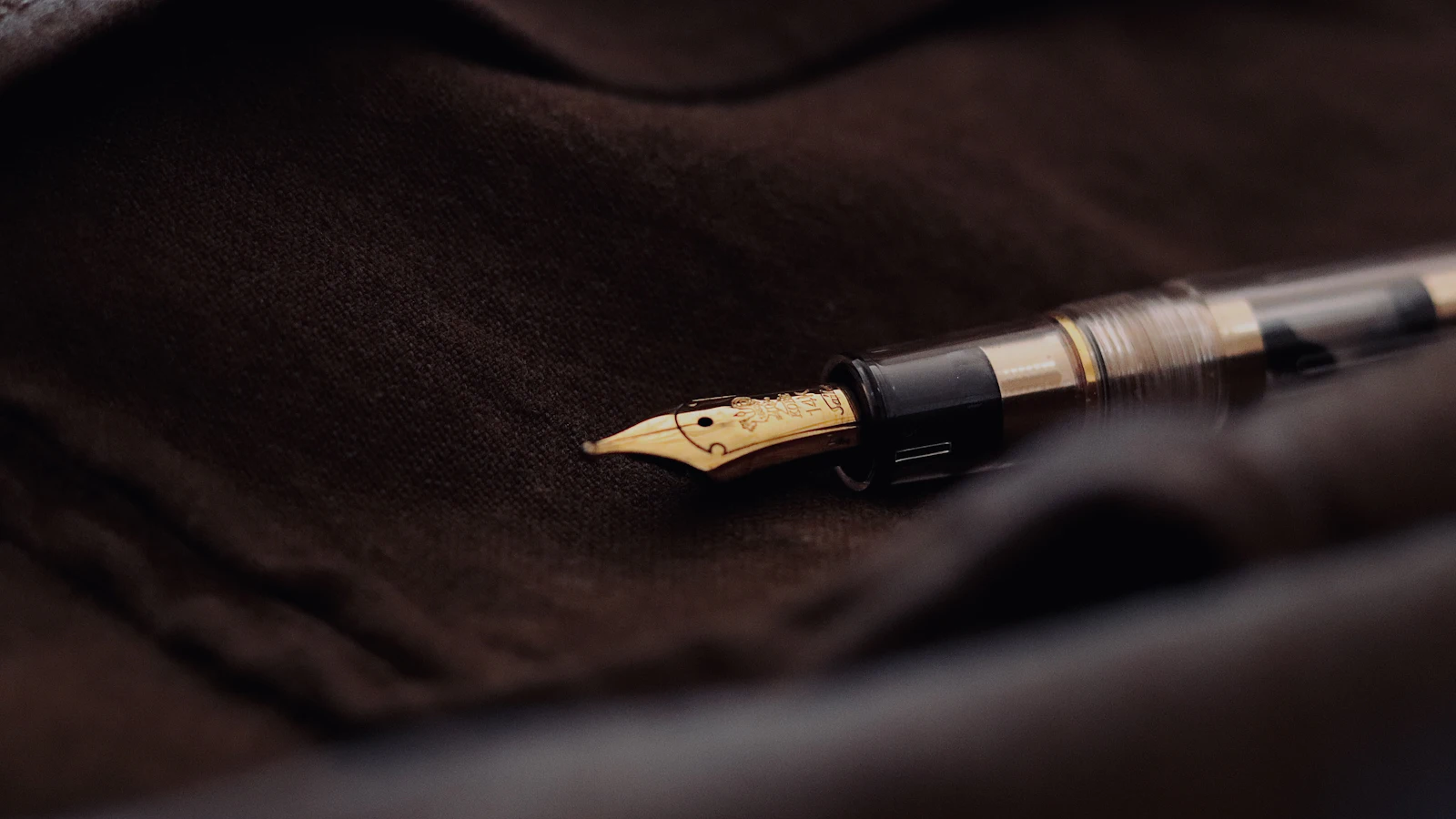
The idea of a pen with its own ink supply is old. Explain that Stuff says historians believe a pen with a built-in ink reservoir dates back as far as 10th-century Egypt. Wikipedia’s fountain pen article adds that screw-mechanism piston fillers were made as early as the 1820s.
What the early pens struggled with was control. Too much ink could pour out at once, or the flow could be uneven. That problem is exactly what Waterman’s feed was designed to solve.
What Lewis Waterman changed
Waterman’s patent describes ink flowing down through a groove while air moves up through the same groove in the opposite direction. This keeps the ink from discharging too quickly. Wikipedia names the design the three fissure feed and says he founded the Waterman Pen Company.
The History of Information page, quoting Wikipedia, lists three key inventions behind the modern pen: the iridium-tipped gold nib, hard rubber and free-flowing ink. Waterman’s feed belongs to the third of these.
You may have heard that Waterman invented his pen after an ink blot ruined a sales contract. Wikipedia calls that story completely unfounded, so treat it as a legend. He was inducted into the National Inventors Hall of Fame in 2006, according to the same article.
What happened after Waterman
Filling systems kept improving. Wikipedia says the modern piston filler traces to the original Pelikan of 1929. Cartridges came later: the Italian LUS Atomica of 1952 was the first, and the Waterman C/F of 1953 brought cartridge filling to the international market. Most pens today use a piston filler, a squeeze-bar filler or a cartridge. A converter fits the same socket as a cartridge and lets you fill from a bottle.
The ballpoint pen followed a different path. If you are curious about that story, read our guide on who invented the ballpoint pen.

Fountain pens today
A fountain pen needs only a light touch and gives smooth, even lines, so many students use one to improve handwriting. Calligraphy learners also like the control a nib gives. At Decent Stationery you can browse the full fountain pen collection, including the Piano fountain pen and the Dux fountain pen. If you want to buy a fountain pen online in Pakistan, the product page shows the current fountain pen price in Pakistan.
A pen is only half of the setup. Pick a suitable bottle or cartridge from the fountain pen ink collection, and read how a pen works in our guide to how fountain pens work.
A timeline of fountain pen milestones
The dates below come from the sources named in this article. They show how slowly the design improved, and how long ago some ideas first appeared.
- 10th century: historians believe a pen with a built-in ink reservoir existed in Egypt (Explain that Stuff).
- 1820s: screw-mechanism piston fillers were made (Wikipedia).
- 1850s to 1880s: several inventors develop efficient fountain pens (History of Information).
- 12 February 1884: Lewis Waterman receives US patent number 293,545 for his ink feed.
- 1929: the original Pelikan introduces the modern piston filler (Wikipedia).
- 1952: the Italian LUS Atomica is the first cartridge pen (Wikipedia).
- 1953: the Waterman C/F brings cartridge filling to the international market (Wikipedia).
Myths and misunderstandings
Because the fountain pen has a long history, a few stories have grown around it.
- “One person invented it.” The sources describe several inventors over several decades. Waterman is credited with the practical feed, not with the whole idea.
- “An ink blot started it all.” The famous blot story is popular, but Wikipedia calls it completely unfounded.
- “Old pens are always better.” Older pens have charm, but a modern pen with a reliable feed and a good nib is just as good for daily writing.
- “Fountain pens are only for experts.” A beginner can use one with cartridges and a light touch, as explained in our guide on how to fill ink in a fountain pen.
Why the history helps when you buy a pen
Knowing the story makes it easier to understand what you are buying.
- The feed matters. Waterman’s key idea was that ink and air must move through the same narrow channel in opposite directions. A pen with a good feed writes smoothly. A poor feed may blot or skip.
- The filling system matters. Cartridges are easy and clean. Converters let you use bottled ink. Piston pens hold more ink. Pick the one that matches how often you write.
- The nib matters. The nib is the part that touches the paper. A smooth nib makes writing comfortable, and a damaged one makes it scratchy.
- The ink matters. Use ink made for fountain pens. Using the wrong ink can block the feed.
A student who writes a few pages a day usually does well with a cartridge pen. Someone who writes at length may prefer a converter or a piston filler, since it holds more ink and gives more choice of colors.
Fountain pens in daily life in Pakistan
Many students in Pakistan are asked to write neatly in exams, and a fountain pen can help build a steady hand. Calligraphy fans also value the control a nib gives. Whatever your reason, a good pen is something you can use for years if you look after it. Rinse it when you change the ink, cap it after use and store it flat or nib-up.
Frequently Asked Questions
No single person did. Several inventors built efficient versions between the 1850s and the 1880s. Lewis Waterman is credited with the practical modern feed.
A pen with a built-in ink reservoir is thought by historians to date to 10th-century Egypt. Waterman’s key US patent is from 12 February 1884.
That is a popular legend. Wikipedia calls it completely unfounded.
Wikipedia says the first was the Italian LUS Atomica in 1952. The Waterman C/F of 1953 brought cartridge filling to the wider market.
Many students like it for neat handwriting, but it needs ink and a little care. Younger children may prefer to start with a simple, sturdy model.
Decent Stationery, based in Lahore, lists fountain pens on its website. Check each product page for the pen type, ink system and current price.
Conclusion
The fountain pen is a story of many hands, and Waterman’s 1884 feed is the chapter that made it practical. Choose a pen that suits your hand, fill it with good ink and enjoy the writing.
Related Reading
Sources and Further Reading
- Wikipedia: Fountain pen
- Wikipedia: Lewis Waterman
- History of Information: Lewis Waterman Develops an Efficiently Functioning Fountain Pen
- Explain that Stuff: How do fountain pens work?
About the Author
Written by the Decent Stationery team in Lahore. We sell school, office and art stationery online across Pakistan, including fountain pens, inks and notebooks. The dates and history come from the sources named in this article, and product details come from our own product pages.