
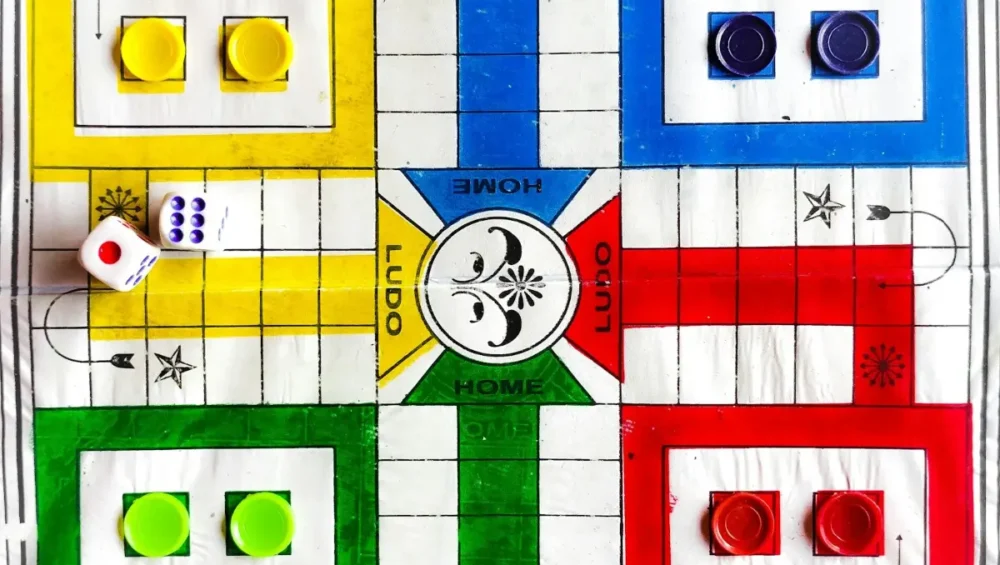
Here is how to play Ludo game in brief. Two to four players each take four tokens of one colour and roll a single die in turn. A six brings a token out of the yard onto the track. Tokens then travel clockwise by the exact number rolled, send an opponent’s token home by landing on it, and must enter the centre with an exact throw. The first player to bring all four tokens home wins. This guide from Decent Stationery sets out the rules in order and shows where house rules differ.
Key Takeaways
- Two to four people play, each with four tokens and one die.
- A six brings a token out of the yard and earns another roll.
- Landing on an opponent’s single token sends it back to its yard.
- A token must reach the centre by exact count, and the first player to bring all four home wins.
- Safe squares and the three-sixes rule vary, so agree them first.
What you need to play Ludo
A standard set holds a square board, four sets of four tokens in different colours, and one die, as the Magic Toy Shop describes it. The board is cross-shaped. Wikipedia explains that each arm has three columns of squares, usually six to a column, and that the middle column of each arm is coloured to form that player’s home column.
| Part of the board | What it does |
|---|---|
| Yard | The corner area where a player’s four tokens wait |
| Starting square | The coloured square where a token first enters the track |
| Home column | The coloured lane to the centre, closed to opponents |
| Finishing square | The centre of the board, reached by exact count |
How to set up a game of Ludo
- Each player chooses a colour and places all four tokens in the matching yard.
- Every player rolls the die once, and the highest roller goes first.
- Play passes clockwise around the table.
- Agree the house rules before starting. The questions to settle are which squares are safe, whether three sixes in a row cancel a turn, and what happens when a roll is too large to finish.
The rules of Ludo, step by step
How do you bring a token onto the board?
A token leaves the yard only on a six, and it goes to the player’s own starting square. If no token is on the track and the roll is not a six, the turn passes to the next player.
How do tokens move?
On each turn the player rolls and moves one token by the full number shown. Tokens travel clockwise around the outer track and then turn up their own home column. When several tokens are in play the player chooses which one to move.
What does a six do?
A six brings a token out of the yard, or it moves a token already on the track by six squares. Either way it earns a bonus roll. AlignIt Games says that in most versions three sixes in a row cancel the turn, while Rarepike calls this a feature of “many rule sets”, so treat it as a house rule.
How does capturing work?
If your token lands on a square holding a single opponent token, that token returns to its owner’s yard. The owner must then throw a six to bring it out again. A token on a safe square cannot be captured.
What are safe squares and blocks?
Wikipedia states that the squares of a player’s home column are always safe, because opponents cannot enter them. Rarepike says the safe spaces on the track are typically the star-marked squares and each player’s starting square. Two of your own tokens on one square can form a block. In one version an opposing token that lands on a block is sent home, and in another the block simply cannot be passed.
How does a token finish?
After a full circuit a token enters its home column. It must then reach the centre by exact count. A roll larger than the remaining distance cannot be used with that token, although some households let the token bounce back by the surplus.
Who wins?
The first player to bring all four tokens to the finishing square wins. Casual games often carry on so that second and third places can also be decided.
| Rule | Standard version | Common variation |
|---|---|---|
| Players | Two to four | A six-player version exists in a few countries |
| First to play | Highest roll | Any method the players agree |
| Leaving the yard | A six | A one also counts in Vietnam |
| Bonus roll | One extra roll after a six | Three sixes in a row cancel the turn in most versions |
| Finishing | Exact roll into the centre | Overshoot bounces back in some households |
| Dice | One | Two dice in the Indian and Pakistani versions |
Ludo rules that change from house to house
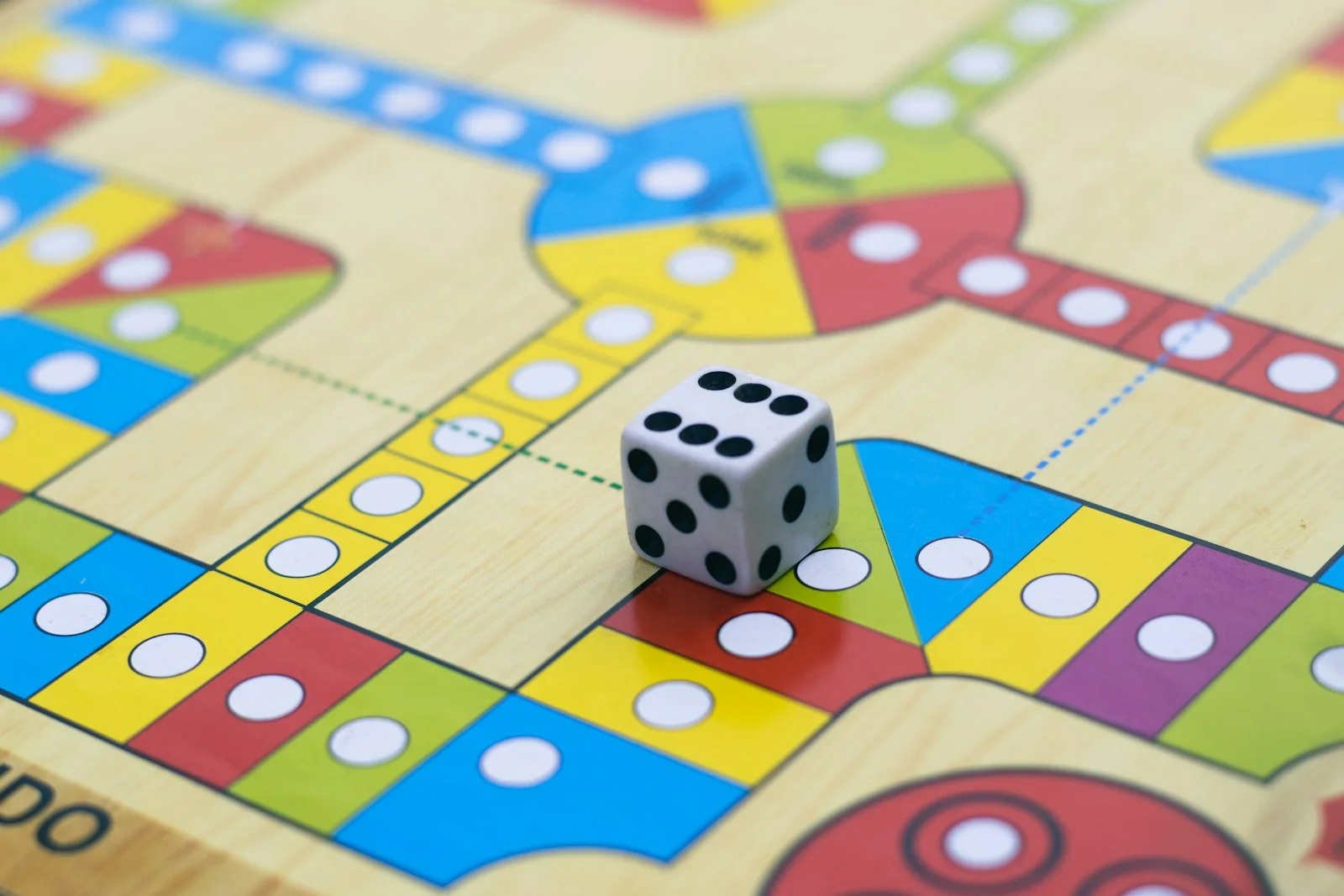
Ludo has no single rule book, and Wikipedia lists several regional versions. In India it is often played with two dice, and a one on a die can bring a token into play. In Pakistan, according to the same article, two dice are used and backward movement is allowed. In Denmark, globe and star spaces mark the safe squares. AlignIt Games advises players to agree on the version before they begin, and a two-minute talk at the table prevents most disputes.
Simple Ludo strategy for beginners
- Bring a new token out when you throw a six. Rarepike points out that more tokens in play give you more choices on later turns.
- Rest tokens on safe squares when opponents are close behind.
- Count the gap between tokens. A single die moves a token from one to six squares, so an opposing token that stands one to six squares behind yours can capture it with a single throw.
- Be patient at the end. Needing one exact number means waiting, since a die shows any given number about one time in six.
Playing Ludo with children
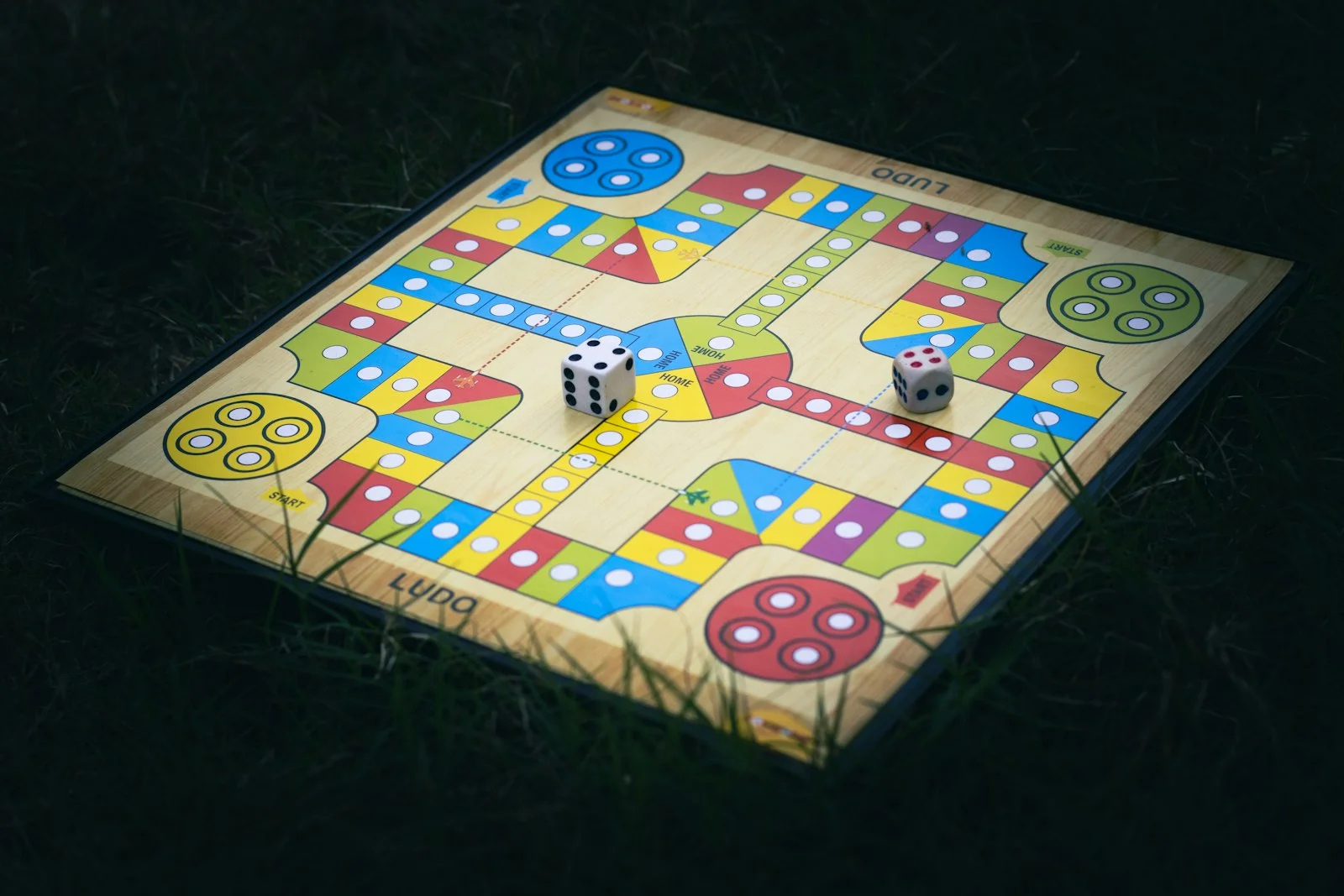
Ludo suits a family evening because the rules are short and the turns are quick. Jaques of London, which sells the game, gives an average playing time of 20 to 30 minutes. With younger children it helps to let them count the squares aloud as the token moves, and to leave out the three-sixes rule at first. Our guide to sports equipment and educational toys for kids offers more games for the home, and how to make flash cards for kids turns number practice into a quiet game of its own. For a party table, see our notes on birthday party supplies and gift wrapping ideas.
Where Ludo comes from
Ludo is a younger relative of Pachisi. Britannica describes Pachisi as a game created in India in about the 4th century CE, played on a cross-shaped track with moves set by cowrie shells or dice. Marked squares called castles protect pieces from capture. Live History India adds that Abul Fazl, the biographer of the emperor Akbar, gave the earliest detailed account of its rules in the Ain-i-Akbari.
The modern board game dates from 1896. Wikipedia records that Alfred Coller marketed Ludo in England that year and later patented it as “Royal Ludo”. Jaques of London says Ludo was invented, in the commercial sense, by the firm in 1896. The sources agree on the year and differ on the inventor. According to Jaques, the 1896 version replaced cowrie shells with dice, gave each player a colour-coded home corner and printed safe squares on the board.
Games for the home shelf
You can see what is listed in our shop ludo online category. Stock changes, so check the page for what is available at the moment. Other games for the same evening are found among our playing cards, such as the Anime Yugioh Collection Rare Cards Box of 36 sealed packs, and the Badminton Racket Pair, which comes with two rackets, a shuttlecock and a small ball.
Frequently Asked Questions
Two to four people can play Ludo, and each player has four tokens of one colour. Wikipedia notes that a six-player version exists in a few countries, but it is uncommon.
In the standard game a token can leave the yard only on a six. Some regional versions differ. Wikipedia records that in Vietnam a one has the same standing as a six.
The opponent’s token is sent back to its yard, and its owner needs a six to bring it out again. A token on a safe square cannot be captured.
Yes, in most versions. A roll larger than the remaining distance cannot be used with that token, according to AlignIt Games, although some households let the token bounce back by the surplus.
Each player rolls the die once and the highest roller begins. Play then passes clockwise around the table.
No, but Ludo descends from Pachisi. Britannica describes Pachisi as an Indian game from about the 4th century CE, played by four players in two partnerships. Ludo simplified the idea in 1896.
Conclusion
Ludo is easy to learn. Set the board up, agree the safe squares, roll for the first turn, and remember the three habits that matter most: a six to start, the exact count to finish, and care with tokens that stand close in front of an opponent. For more guides, games and school and home supplies, visit Decent Stationery and browse the categories linked above.
Related Reading
Sources and Further Reading
- Ludo, Wikipedia for rules, variants and the 1896 launch
- Pachisi, Encyclopaedia Britannica for the older Indian game
- The History of Ludo, Jaques of London for the 1896 changes and playing time
- Ludo Rules and How to Play, AlignIt Games for standard rules and house variations
- Ludo Rules for Beginners, Rarepike for safe squares and beginner tips
- How To Play Ludo, The Magic Toy Shop for set contents and basic play
- Ludo’s Indian Roots, Live History India for the history of Pachisi
About the Author
Written by the Decent Stationery team in Lahore, a stationery and school supplies store serving families across Pakistan. We prepare our guides from published sources and from everyday experience of what students, parents and teachers ask us.