
A paper pyramid is a classic school project. It teaches shapes, measurement and careful folding, and it makes a good model for a history or math lesson. This guide shows how to make a pyramid with chart paper using a flat pattern called a net. You will need a ruler, a pencil and scissors. Decent Stationery in Lahore stocks chart paper in Pakistan in many colors, and a geometry box for neat measuring.
Key Takeaways
- Draw a square for the base and an isosceles triangle on each side of it.
- Cut out the whole shape as one piece and add small glue tabs.
- Fold along the lines and glue the tabs to close the pyramid.
A little geometry first
Wikipedia’s Pyramid (geometry) article says that a pyramid with an n-sided regular base has n + 1 faces. A square pyramid therefore has five faces: one square base and four triangles. The Net (polyhedron) article describes a net as a set of non-overlapping polygons in a flat plane, joined along edges, that can be folded along those edges to form the faces of a polyhedron. Your cross-shaped pattern is the net of a square pyramid.

What you need
- A sheet of chart paper. A firm one such as hard chart paper folds into a stronger pyramid
- A pencil, an eraser and a ruler (a geometry box has one)
- Scissors
- A glue stick or tape
- Markers for decoration
If you are new to geometry tools, see our guide on how to use a geometry box.
How to make a pyramid with chart paper, step by step
- Draw the base. In the middle of the chart paper, draw a square. For a medium pyramid, a side of 10 cm is a good start.
- Draw four triangles. On each side of the square, draw an isosceles triangle. Each triangle has a base equal to the side of the square (10 cm). Make each triangle about 12 cm tall, measured from the square’s edge to the tip.
- Check the height. For the sides to meet in a point above the base, each triangle should be taller than half of the base (more than 5 cm in this example). A taller triangle makes a steeper pyramid.
- Add glue tabs. Draw a narrow strip, about 1 cm wide, along one slanted edge of each triangle.
- Cut it out. Cut along the outer lines as one piece, keeping the square and the four triangles joined.
- Score the folds. Lightly press along the lines between the square and the triangles with a ruler and a blunt pen so they fold neatly.
- Fold and glue. Fold the triangles up so their tips meet. Glue each tab to the neighboring triangle.
- Hold until dry. Press the seams for a minute. Then decorate.
The 10 cm and 12 cm sizes are example numbers. If you change them, keep the triangle height greater than half the base so the tips can meet.
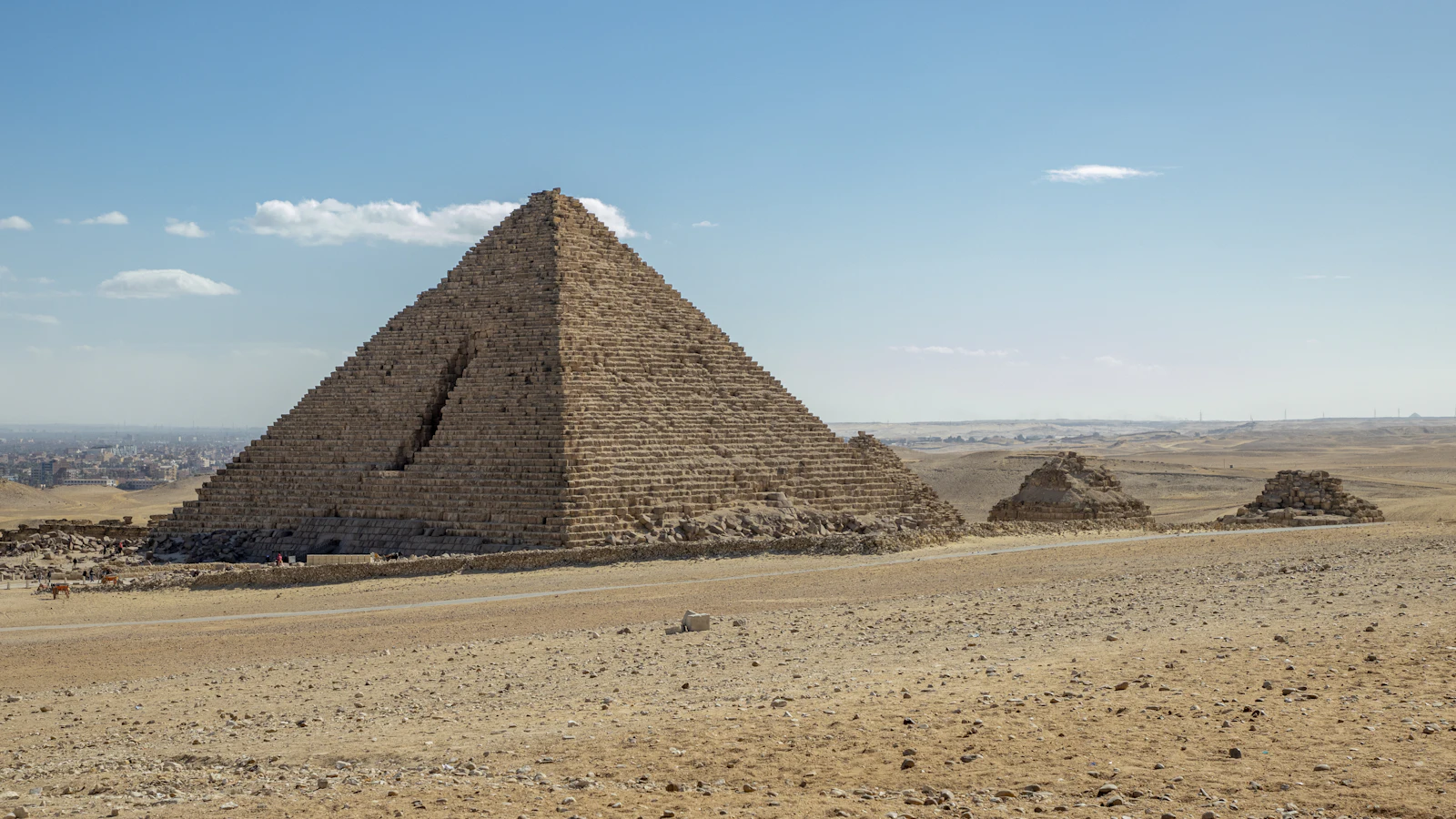
Make it look like an Egyptian pyramid
- Use sand-colored chart paper or paint the surface.
- Draw horizontal lines to look like stone blocks.
- Add a small door on one side.
- Cut a base board from card and glue some sand or brown paper around it.
Other pyramids and shapes
- Triangular pyramid: use a triangle base and three triangles on its sides. It is also called a tetrahedron and has four triangular faces.
- Taller or shorter pyramid: change the height of the triangles.
- Hexagonal pyramid: use a six-sided base and six triangles. By the same rule, it has seven faces.
- Other solids: you can try the same net method for a cube or a prism.
Tips for a neat pyramid
- Draw in pencil first and use ink only after you have checked the lines.
- Cut slowly along the lines.
- Use a ruler for every fold.
- Do not use too much glue, since wet paper may wrinkle.
- Make a rough copy on scrap paper first, then use the good chart paper.
Where to buy chart paper in Pakistan
Decent Stationery lists many colors of chart paper on its chart paper collection page. You can buy chart paper online in Lahore or anywhere in Pakistan. Check each product page for the color, size and current price. For more project ideas, see chart paper decoration ideas for school.
Parts of a pyramid in simple words
Building a pyramid is a good way to learn geometry words. A square pyramid has:
- One square base at the bottom
- Four triangular faces that meet at a point
- One apex, which is the top point
- Eight edges where the faces meet
- Five vertices, including the apex and the four base corners
A triangular pyramid, also called a tetrahedron, has four triangular faces, six edges and four vertices. You can ask students to count these on their paper models and check the numbers.
Measuring and cutting the net accurately
A pyramid only closes properly if the triangles are equal and the base fits them. Follow these steps for a neat net.
- Decide the side length of the base, for example a square with sides of equal length.
- Draw the square lightly with a pencil and ruler.
- On each side of the square, draw a triangle whose base is that side.
- Make sure all four triangles have the same height, so they will meet at one point.
- Add a thin tab on one side of each triangle for gluing.
- Check all lengths with a ruler before you cut.
If you want to practice construction first, you can read our guide on how to use a geometry box for help with a ruler, set squares and compass.
Folding and gluing
Use the back of a scissors blade or a ruler edge to score along each fold line. This makes the fold sharp and neat. Fold the triangles up to meet over the base, and glue the tabs one by one. Hold each join for a minute so that it stays firmly. If a gap appears at the top, add a small piece of paper or tape over the apex.
Troubleshooting
- The top does not close. The triangles may be too short. Make them taller or reduce the base size.
- The pyramid leans to one side. One of the triangles is a different size. Compare them and trim.
- The edges look rough. Cut slowly and use sharp, clean scissors.
- The glue shows. Use less glue and wipe extra with a tissue.
- The paper bends. Use a thicker sheet or add a layer of card inside the faces.
Classroom ideas
- Each student makes a pyramid with a different base size, and the class compares them.
- Students write the name of each part on the model.
- A group makes several pyramids and stacks them to build a pattern.
- Students use the model for a presentation on ancient Egypt or on 3D shapes.
- The teacher hangs the pyramids from the ceiling as a display, as in our guide on chart paper decoration ideas for school.
Frequently Asked Questions
Five: one square base and four triangles.
A net is a flat pattern of joined shapes that can be folded to form a solid.
Firm chart paper holds its shape better than thin paper.
Make each triangle taller than half the length of the base, then fold the triangles up and glue the tabs.
Yes, with tape or by tucking small tabs into slits, but glue gives a firmer finish.
Decent Stationery lists chart paper online from Lahore. Check each product page for the color, size and current price.
Conclusion
A paper pyramid is quick to cut and satisfying to fold. Measure carefully and let the folds do the work.
Related Reading
Sources and Further Reading
- Wikipedia, Pyramid (geometry)
- Wikipedia, Net (polyhedron)
- The step-by-step measurements are example sizes from our team. Product details come from the Decent Stationery product pages.
About the Author
Written by the Decent Stationery team in Lahore. We sell school, office and art stationery online across Pakistan, including chart paper and geometry boxes. Geometry facts come from Wikipedia, and product details come from our own product pages.