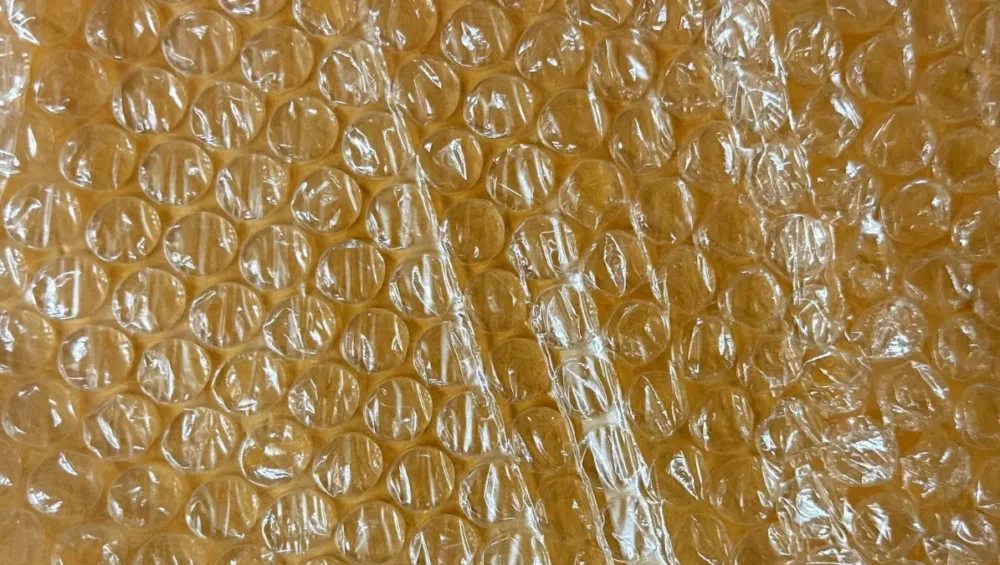
Here is how to pack with bubble wrap. Lay the wrap flat with the bubbles facing up, set the item on it and roll the wrap around the item until every edge and corner is covered, using more layers for heavier or more fragile pieces. Tape the wrap to itself, never to the item. Then place the item in a rigid box, fill the empty space so that nothing can move, and seal the box with proper shipping tape. This guide from Decent Stationery in Lahore sets out the steps, the choice of bubble size, the matter of which side faces the item, and the box and filling that complete the job.
Key Takeaways
- Cover the whole item, including corners and edges, with several layers.
- Four of the guides we read put the bubbles against the item. UPS advises the opposite, so check your courier’s rule.
- Apply tape to the wrap, not to the object.
- Small bubbles suit glassware and electronics. Large bubbles suit heavy items.
- Shake the closed box gently. If anything moves, add more wrap or filler.
What You Need Before You Start
Short answer: bubble wrap, scissors, tape, a strong box and some filling material.
Airtasker advises a flat, roomy work surface cleared of keys and sharp objects, and scissors for cutting the wrap, since tearing it by hand risks damage and injury. This Old House recommends small, thick boxes with a “Fragile” label, and notes that heavier items should go at the bottom. For sealing, UPS says to use shipping tape only, and lists masking, cellophane and duct tape among the tapes it does not accept.
A roll of brown packaging tape such as the Adhesive Packaging Tape Rolls suits the outer box. Its product page lists lengths of 60 and 90 yards. The width is not stated, so check before ordering.
Which Bubble Wrap Size Should You Use?
Short answer: use small bubbles for light, fragile items and large bubbles for heavy ones.
ConsumerAffairs describes three sizes.
| Bubble size | Diameter | Suited to |
|---|---|---|
| Small | About 3/16 inch (4.8 mm) | Glassware, dishes, ornaments, small electronics |
| Medium | 5/16 inch (8 mm) | Moderately fragile items such as television screens and artwork |
| Large | 1/2 inch (12.7 mm) | Medium to heavy items that need the most impact protection |
The same page says that phone and tablet screens may call for 1/8 inch bubbles. Duck Brand makes a similar division, pairing small bubble wrap with small to medium items and large bubble wrap with bigger ones.
Which Side of Bubble Wrap Faces the Item?
Short answer: most guides put the bubbles against the item and the smooth side outward, but UPS says otherwise.
| Source | Which way the bubbles face |
|---|---|
| Duck Brand | Bubble side closest to the item |
| ConsumerAffairs | Bubbles inward, toward the item |
| Stanley Packaging | Bubbles on the inside of the package, smooth side out |
| Airtasker | “Bubble side in, flat side out” |
| UPS | Flat surface against the product, bubbles facing away |
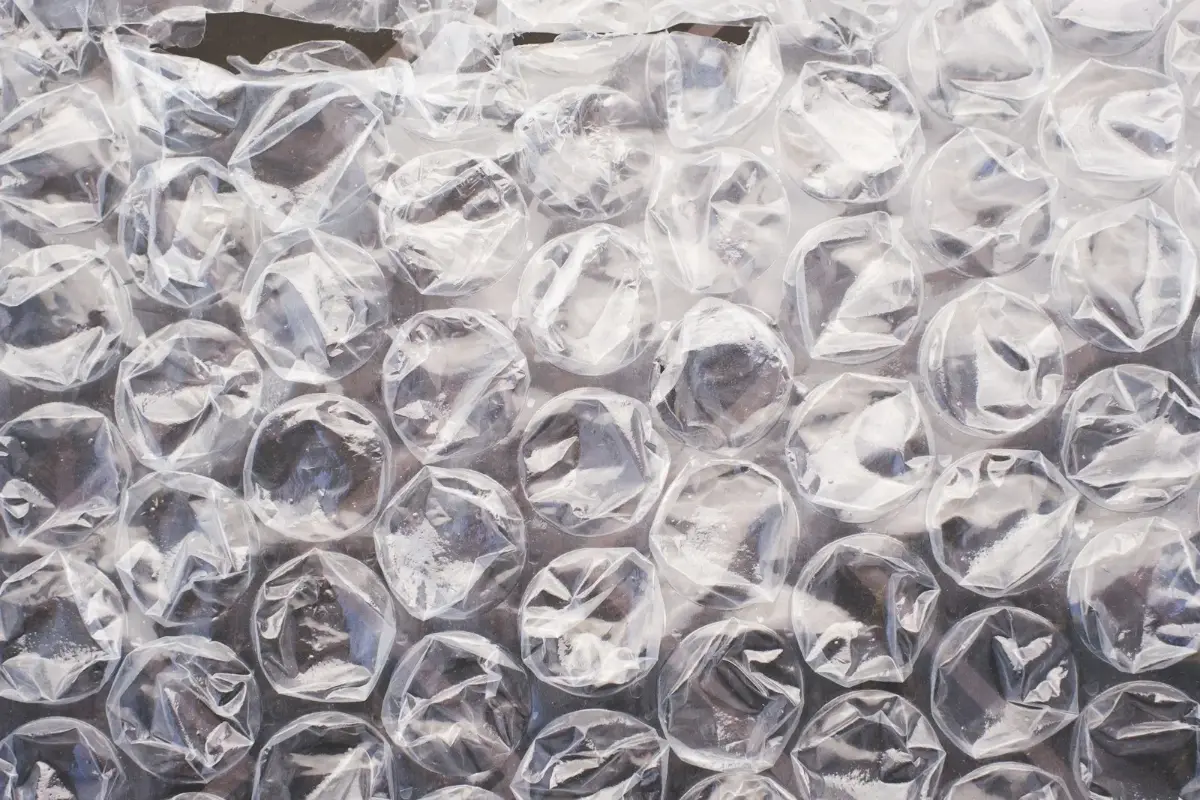
Stanley Packaging gives several reasons for the bubbles-in method. The smooth outer side grips better, takes tape and labels more easily, and stays cleaner, while the bubbles remain intact for reuse. Airtasker adds that bubbles facing outward pop more easily and protect less. UPS gives no reason on the page we read. For a parcel handed to a courier, follow the courier’s own instructions. For a house move or storage, the majority method is a sound choice.
How to Pack With Bubble Wrap, Step by Step
Short answer: cut the wrap, roll the item in several layers, tape the wrap to itself, and check that no corner is exposed.
- Prepare the surface. Clear a flat area, as Airtasker advises.
- Cut enough wrap. Cut a piece long enough to go around the item several times.
- Wrap the item. ConsumerAffairs says to lay the wrap with the bubbles facing up, set the item on it and roll the wrap around, covering all edges and surfaces. Airtasker describes this as the roll method, or “burrito” method. Its other method is to centre the item and fold the wrap generously around it.
- Use more layers for fragile pieces. No source gives a fixed number of layers. ConsumerAffairs says to use multiple layers for fragile pieces, and UPS asks for multiple wraps, particularly at corners and edges.
- Tape the wrap, not the item. ConsumerAffairs says to apply the tape only to the bubble wrap. This avoids scratches and leaves the object clean.
- Leave no open edge. Duck Brand warns that gaps can expose corners or let the item slip out.
- Mark the package. Write “Fragile” or a similar note in large letters, as Duck Brand and Housing.com both suggest.
How do you wrap plates, glasses and picture frames?
Short answer: add a layer of paper to plates, fill hollow items, and keep frames face down.
This Old House and Airtasker give item-specific advice.
| Item | What the sources advise |
|---|---|
| Plates | Wrap in newspaper or kraft paper first, then bubble wrap, and stand them on their sides in the box |
| Glasses and vases | Fill the hollow with paper or similar material, then wrap in bubble wrap |
| Framed art | Wrap in bubble wrap, then packing paper, frame face down, and use a heavy-duty box |
| Electronics | Use the original box where possible, otherwise bubble wrap and a padded box |
| Lamps | Take apart, bag the hardware, then wrap the lamp in packing paper or bubble wrap |
How Should You Pack the Box?
Short answer: a rigid box, a cushioned base, no loose space, and a firm seal.
UPS says to use a rigid box with the flaps attached and not to exceed the weight limit printed on the bottom flap. Where an item is especially delicate, UPS describes a two-box method. The outer box should be 6 inches (15 cm) larger than the inner box in depth, width and length, with 3 inches (7.6 cm) of cushioning between them. For lightweight items packed in loose filler, UPS asks for no less than 2 inches (5 cm) of filler around the contents.
Housing.com recommends a double layer of packing tape on the bottom of each box and some foam, packing peanuts or newspaper at the base to absorb shock. ConsumerAffairs adds cardboard dividers between items in the same box, and a simple test. Gently shake the box. If anything moves, add more wrap.
Common Mistakes to Avoid
Airtasker lists several errors worth avoiding.
- Facing the bubbles outward, which it says makes them pop easily.
- Tearing the wrap by hand instead of cutting it.
- Using too few layers on large or heavy breakables.
- Leaving out a paper layer for dishes, mirrors and screens.
- Leaving wrapped items loose in the box.
It also suggests keeping spare wrap for reuse.
Packing Fragile Items in Pakistan
We did not find a Pakistani source on parcel packing, so this section rests on our own practice and the guides above. When a parcel travels by courier, it may be handled and stacked several times. For that reason the box, the cushioning and the tape matter as much as the wrap itself. Many couriers publish their own packing rules, and it is sensible to read them before sending.
Decent Stationery offers a bubble wrap in Pakistan page within its packing materials range, and our guide to packing materials and industrial supplies says bubble wrap comes in sheets and rolls sized for different shipment volumes. Stock changes, so check the page for what is available. If you also store food items, the cling film in Pakistan page is the related category. Small businesses that ship regularly may find the essential office supplies checklist useful when planning a monthly supply.
A Short History of Bubble Wrap
According to Wikipedia, Alfred Fielding and Marc Chavannes invented bubble wrap in 1957 in New Jersey by sealing two shower curtains together to trap air. They first tried to sell it as wallpaper, then as greenhouse insulation. Sealed Air introduced the Bubble Wrap brand in 1960, and in 1961 IBM became its first packaging customer, using it to protect the IBM 1401 computer in transit. Mental Floss agrees on the 1957 date and the failed wallpaper idea.
Frequently Asked Questions
Most of the guides we read, including Duck Brand, ConsumerAffairs, Stanley Packaging and Airtasker, put the bubbles toward the item. UPS advises the flat surface against the product. Follow your courier’s rule when shipping.
No source gives a fixed number. ConsumerAffairs says to use multiple layers for fragile pieces, and Airtasker says larger breakables need more. A good test is to shake the closed box and add more if anything moves.
Use tape on the wrap itself to hold it in place. For the outer box, UPS says to use shipping tape only and not masking, cellophane, duct or water-activated paper tape.
Housing.com suggests foam, packing peanuts and newspaper for filling the box, and mentions honeycomb paper in place of thermocol for Indian readers. Plates may be wrapped in paper before the bubble wrap, says Airtasker.
No. The box, the filling and the seal matter as well. UPS asks for a rigid box, and for delicate goods a second box with cushioning between the two.
Alfred Fielding and Marc Chavannes, in 1957, according to Wikipedia and Mental Floss.
Conclusion
Good packing is mostly careful work. Cut the wrap with scissors, cover every corner, tape the wrap and not the item, and use a firm box with no loose space. Practise once with a spare mug before packing something that matters. When you need rolls, tape or other packing supplies, browse Decent Stationery.
Related Reading
Sources and Further Reading
- Duck Brand: 4 Ways to Pack Fragile Items
- ConsumerAffairs: How to Use Bubble Wrap for Packing
- Stanley Packaging: Which Side of Bubble Wrap Should You Use?
- Airtasker: How to Use Bubble Wrap for Packing
- This Old House: How to Pack Fragile Items
- Housing.com: How to Pack Fragile Items
- UPS: How to Pack Your Shipments
- Wikipedia: Bubble Wrap (brand)
- Mental Floss: The Original Purpose of Bubble Wrap
About the Author
Written by the Decent Stationery team in Lahore. We sell school, office and packing supplies online across Pakistan. Packing advice, sizes and dates come from the linked sources, and shop details from our own pages.