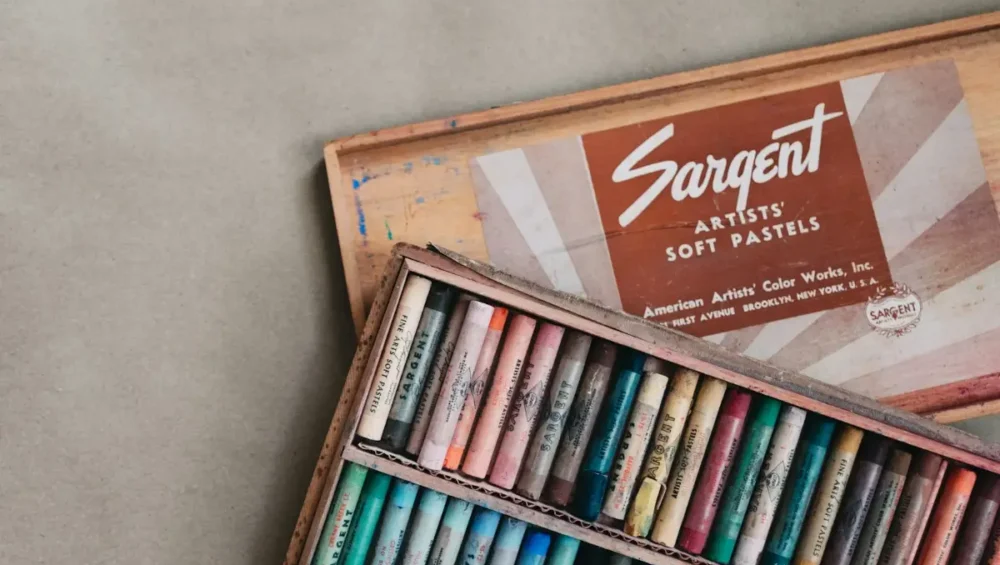
The difference between soft pastels and oil pastels lies chiefly in the binder that holds the pigment together. A soft pastel is mostly pigment with a small amount of gum or similar binder, so it is dry, powdery and easy to blend. An oil pastel is pigment bound with oil and wax, so it is creamy, bold and slow to blend. Soft pastels need a fixative or a glass frame to protect the finished work, while oil pastels never dry out completely. This guide from Decent Stationery in Lahore compares the two in plain terms, so that you can choose the right one for your drawing.
Key Takeaways
- Soft pastels use a small amount of gum or methyl cellulose as binder. Oil pastels use a non-drying oil and wax.
- Soft pastels blend easily with a finger. Oil pastels resist blending unless a solvent or oil is used.
- Soft pastels are dusty and smudge, so finished work needs a fixative or a frame under glass.
- Oil pastels are less powdery and more intense in colour, but they stay slightly tacky.
- The two kinds are not usually mixed in one picture, because their binders are so different.
- For a first purchase, the choice depends on the effect you want. A soft, smoky finish suits soft pastels, and bold, crayon-like marks suit oil pastels.
What Are Soft Pastels and Oil Pastels?
Short answer: both are sticks of coloured pigment, but a soft pastel is chalky and dry, and an oil pastel is creamy and greasy.
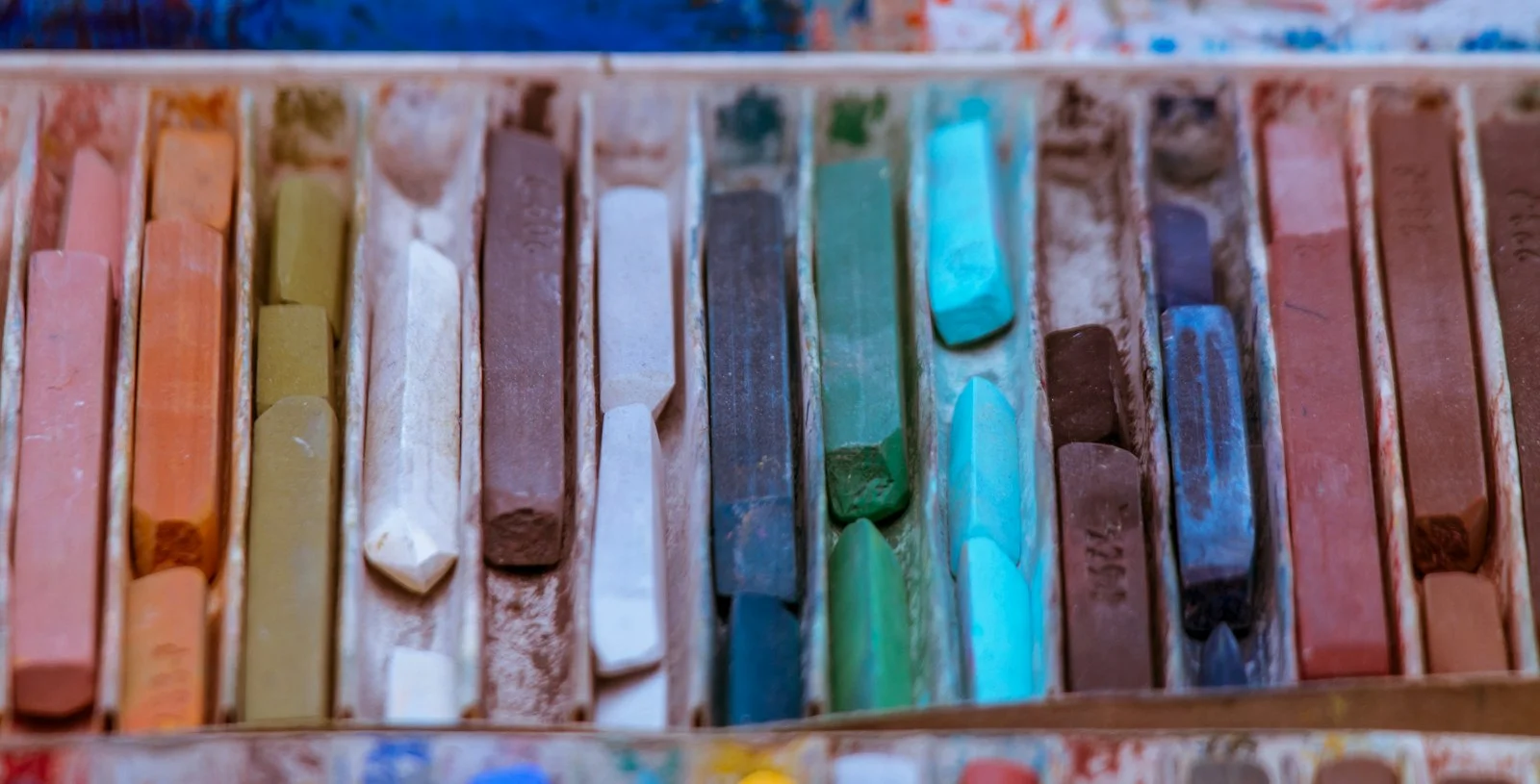
The Tate glossary defines pastel as a coloured drawing medium made from pure pigment mixed with a binder to form a stick. It names soft, hard and pencil forms, and calls soft pastel the most commonly used. Tate describes oil pastels as made with an oil and wax binder, with a creamy consistency very different from the chalkier feel of soft pastels.
Wikipedia adds that soft pastels have a high proportion of pigment and little binder. That is why their colour is rich, and also why they produce more dust. Hard pastels have more binder and less pigment, which suits fine detail. This article leaves hard pastels aside and compares the two kinds that most beginners meet first.
Soft Pastels vs Oil Pastels at a Glance
Short answer: soft pastels are dry, dusty and easy to blend, while oil pastels are waxy, bold and sticky.
| Feature | Soft pastels | Oil pastels |
|---|---|---|
| Binder | Gum or methyl cellulose, in small amount | Non-drying oil and wax |
| Feel | Dry, chalky, crumbly | Creamy, slightly greasy |
| Blending | Easy, with a finger or a tool | Harder, needs a solvent or oil for smooth results |
| Colour | Rich but powdery | Typically more intense |
| Dust | Dusty and messy | Little dust once applied |
| Protection | Fixative or glass frame | Never dries fully, sleeve or fixative suggested |
| Common shape | Often rectangular sticks | Often round, like a crayon |
The details in this table come from Tate, Wikipedia, The Virtual Instructor and Cowling and Wilcox. Each is explained below.
How Do the Binders Differ?
Short answer: the binder decides everything else, because it controls how the pigment sticks, smears and stays on the paper.
What holds a soft pastel together?
Wikipedia states that dry pastels were historically bound with gum arabic or gum tragacanth, and that methyl cellulose came into use in the twentieth century. Chalk or gypsum is often added. The Virtual Instructor, a drawing education site by Matt Fussell, also names a gum or methyl cellulose binder for soft pastels. Because the binder is slight, the stick feels like chalk and leaves a loose layer of pigment on the paper.
What holds an oil pastel together?
Wikipedia describes oil pastel as powdered pigment bound with a mixture of non-drying oil and wax. The original binder, it says, was paraffin wax, stearic acid and coconut oil. Since the oil does not dry, the stick stays soft and the drawn layer stays slightly greasy.
Which One Blends Better?
Short answer: soft pastels blend more easily, and oil pastels blend only with some help.
The Virtual Instructor says soft pastels blend or smudge easily with a finger and behave like chalk. Oil pastels behave more like crayons or coloured pencils, and the same site says they are typically not blended with a finger. Instead it suggests a colourless blender, terpenoid or other oil painting medium. Tate and Wikipedia both note that turpentine can soften and spread oil pastel. Cowling and Wilcox adds that thinning oil pastel with a solvent gives a wash. Solvents carry health risks of their own, so use them with open windows and follow the maker’s directions.
Layering also differs. The Virtual Instructor notes that soft pastels cover earlier layers easily, while with oil pastels the colours beneath influence the new ones, so covering takes more effort. Oil pastels can also be scratched into, or applied thickly in a way that resembles impasto oil painting.
Which Paper or Surface Suits Each?
Short answer: both do best on paper with some tooth, and oil pastels tolerate a wider choice of surfaces.
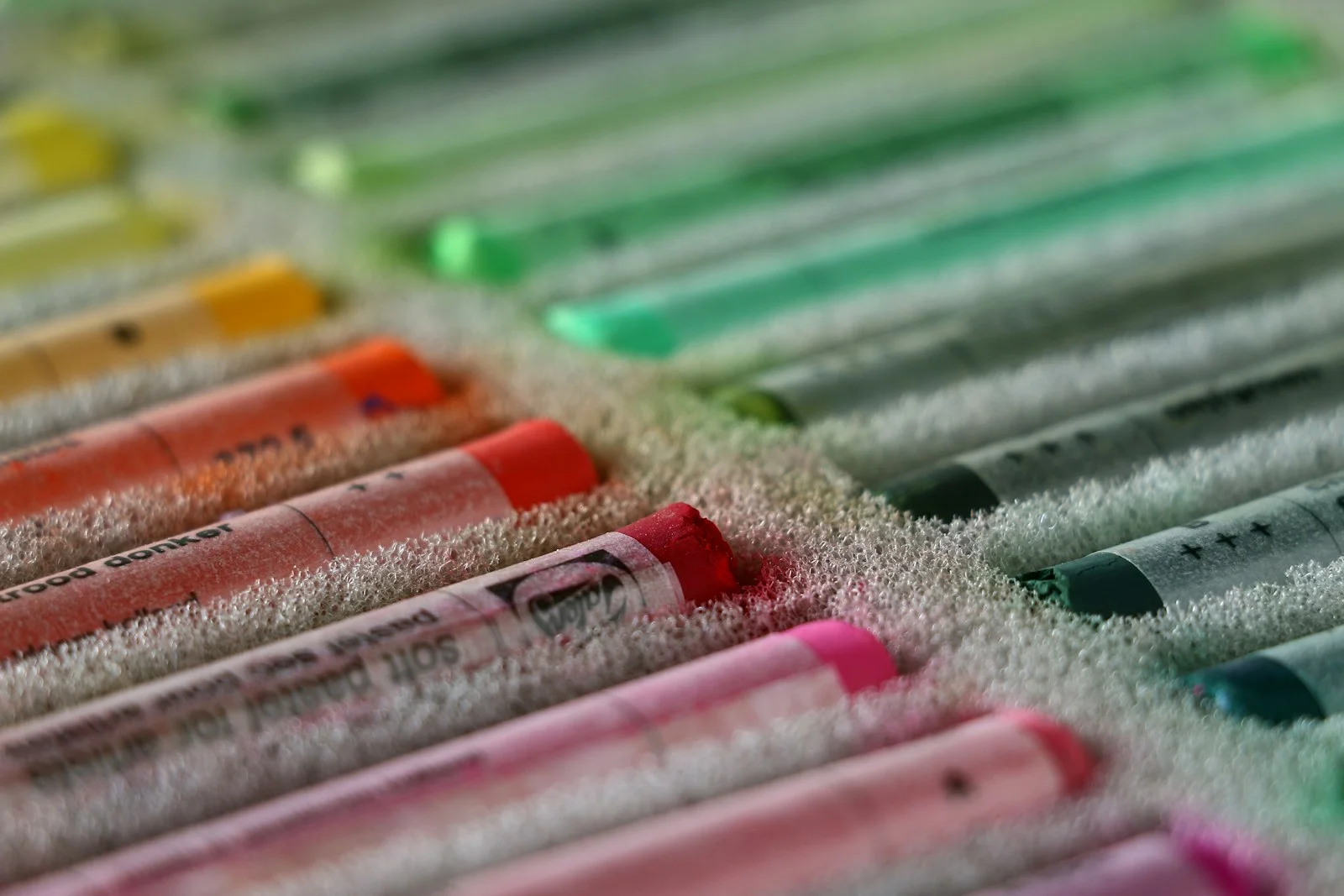
The Virtual Instructor recommends textured papers for soft pastels, since the tooth holds loose pigment and supports layering. It says oil pastels also work on textured paper and on almost any surface, glass included. Wikipedia lists suitable supports for dry pastel, such as laid paper like Canson Mi-Teintes, abrasive papers and velour paper, and it advises acid-free, archival supports.
For practice at home, a heavier drawing paper with a slight grain is a sensible start. Papers made for pastel are listed under pastel sheet in Pakistan. Smooth copy paper is a poor choice, since it gives soft pastel little to grip.
Do Pastels Need a Fixative or a Frame?
Short answer: soft pastels do, and oil pastels are more forgiving but not entirely settled.
Wikipedia states that soft pastels need a fixative or framing under glass. It advises that the glass should not touch the work, and warns against Plexiglas because it can create static electricity that lifts the pigment. It also advises against hairspray as a fixative, since hairspray is not acid-free. Cowling and Wilcox suggests a few light layers of fixative, and recommends that you tap the back of a finished drawing to loosen stray dust. Blowing on the work only spreads the dust.
Oil pastels need no fixative in the same way, says Wikipedia, though works are usually protected by a special fixative or kept in a sleeve before framing. Kokuyo Camlin, a maker of art materials, notes that the surface can stay slightly tacky and collect dust. Wikipedia records that oil pastel never dries out completely, so very old works need care.
Which Is Messier and Which Is Safer?
Short answer: soft pastels make dust, and oil pastels make sticky smudges.
Wikipedia warns that pastel dust can irritate the lungs and that some pigments are toxic, with cadmium named as an example. It notes that pastels carrying the ASTM International AP label are considered non-toxic, but should still be handled with care. Ventilate the room, keep food away and wash hands after use.
Oil pastel gives less dust but more transfer. The Virtual Instructor warns that the sticks are sticky and can pass colour to one another, so wipe the tip of each stick before moving to the next colour.
A Short History of Both
Wikipedia dates the making of pastels to the fifteenth century, and says Leonardo da Vinci learned of the medium after Jean Perreal reached Milan in 1499. Oil pastel is far younger. In 1921 two Japanese teachers, Rinzo Satake and Shuku Sasaki, founded the Sakura Cray-Pas Company, and in 1924 they developed a high-viscosity oil pastel, according to Wikipedia.
The professional version came later. Sennelier, the French maker, says Pablo Picasso asked for a medium that could be used on any surface, and that its workshops made a wax and pigment stick after a year of research. Wikipedia gives 1949 as the year Sennelier released the first professional oil pastels.
Which Should a Beginner Choose?
Short answer: choose soft pastels for soft, blended skies and portraits, and oil pastels for bold, simple colour work.
This is practical advice rather than a rule from the sources. Soft pastels reward a patient hand, since colours merge smoothly, but they leave dust and must be fixed. Oil pastels give strong colour at once and need no blending skill, but they smear when pressed hard. The Virtual Instructor says the two are typically not used together, because the binders differ so much. Start with one kind, learn how it behaves, and keep the other for a later project.
A Practical Note for Pakistan
In a hot Lahore summer, oil pastels may soften in a warm room, so store them in a cool drawer. This is common sense rather than a finding from the sources. Soft pastels are brittle, and a loose box of them in a school bag will crumble, so keep them in their case. Stock changes with the season, so look at the buy soft pastels in Pakistan page for what is available.
If you prefer a pencil for fine detail, Decent Stationery lists the Faber-Castell Colored Pencils and the Arteza Premium Colored Pencils, whose product page gives a pack of 48. For wider reading on art materials, see our fine art supplies guide, the watercolor tubes guide, and the comparison of acrylic and oil paint.
Frequently Asked Questions
The binder. Soft pastels use a small amount of gum or methyl cellulose, and oil pastels use a non-drying oil and wax. This makes soft pastels dry and powdery, and oil pastels creamy and bold.
They are typically not used together, according to The Virtual Instructor, because their binders differ so much. If you wish to try, test a small corner of the paper first.
In our view oil pastels are easier at first, because they make strong marks with little pressure and leave little dust. Soft pastels need fixing and make more mess. An adult should help with solvents and fixative in either case.
No. Wikipedia and The Virtual Instructor both say oil pastels never dry out completely, because the binder is a non-drying oil. They stay slightly soft on the page.
Wikipedia says oil pastel needs no fixative in the way soft pastel does, though it records that works are typically protected with a special fixative or a sleeve. Sennelier sells a clear fixative for its oil pastels.
They hold much pigment and little binder, according to Wikipedia. The loose pigment falls from the stick as you draw, so work in a ventilated room.
Conclusion
Soft pastels and oil pastels look alike in the box, but they behave quite differently on the page. One is dry, smoky and easy to blend, and the other is waxy, bright and slow to smooth. Decide which effect you want, buy a small set of that kind, and try it on a sheet of textured paper. When you are ready to buy materials, browse the range at Decent Stationery.
Related Reading
Sources and Further Reading
- Tate: Pastel, art term definition
- Wikipedia: Pastel
- Wikipedia: Oil pastel
- The Virtual Instructor: Oil Pastels vs. Soft Pastels, A Comparison
- Cowling and Wilcox: Soft Pastels vs. Oil Pastels
- Sennelier: From Cezanne to Picasso, secret stories of Sennelier colours
- Sennelier: Oil Pastels
- Kokuyo Camlin: What is the difference between soft pastels and oil pastels
About the Author
Written by the Decent Stationery team in Lahore. We sell school, office and art stationery online across Pakistan. Facts about materials and history come from the linked sources, and shop details from our own pages.