
Key takeaways: Most broken pencil leads come from sharpening too fast, holding the pencil at the wrong angle, or using a dull or damaged sharpener blade. Turning the pencil slowly and steadily, keeping it at a consistent angle, and stopping as soon as the point is formed will save far more leads than sharpening carefully after a break already happens. A good quality sharpener also makes a bigger difference than most people expect.
Why Pencil Leads Break While Sharpening
Pencil lead is graphite mixed with clay, and it is naturally brittle compared to the wood around it, so any sideways pressure or sudden jerk while sharpening can snap it before it even leaves the sharpener. A dull blade forces you to push harder and turn faster to get a point, which is exactly the kind of pressure that cracks the lead. Cheap or worn-out sharpeners are one of the most common reasons the same pencil keeps breaking no matter how carefully you turn it.
What You Need
- A pencil sharpener with a sharp, undamaged blade
- The pencil you want to sharpen
- A small bin or paper to catch the shavings
- A soft eraser to clean up smudges once you are done
How to Sharpen a Pencil Without Breaking the Lead
Step 1: Check the Sharpener Blade First
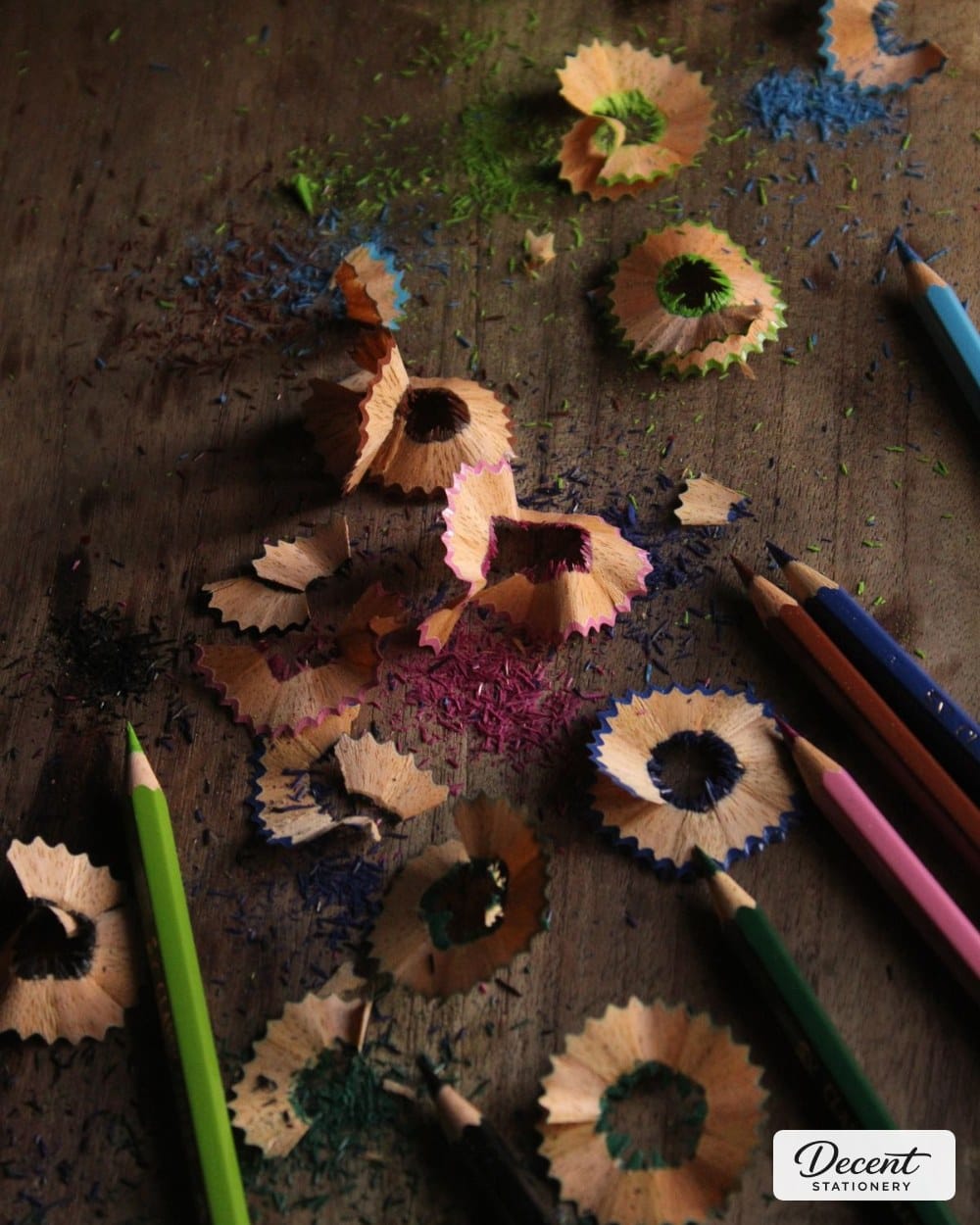
Look at the blade or the shavings from your last use, since a dull blade tends to produce thin, stringy shavings instead of clean curls. If the blade looks worn, switching to a sharper one solves most repeated-breakage problems on its own.
Step 2: Hold the Pencil at a Steady Angle
Insert the pencil into the sharpener at the angle the opening is designed for and keep that angle steady throughout, rather than wiggling or tilting it as you turn. A consistent angle keeps even pressure on the lead instead of stressing it from one side.
Step 3: Turn Slowly and Evenly
Turn the pencil or the sharpener handle slowly and steadily rather than fast, since speed increases the chance of the lead snapping under sudden pressure. Slow, even turns let the blade shave the wood and graphite together instead of forcing the tip.
Step 4: Stop as Soon as the Point Forms
Check the tip after a few turns and stop as soon as you have a clean point, since continuing to sharpen a pencil that is already sharp wears down the lead unnecessarily and increases the odds of it snapping. Over-sharpening also wastes the pencil faster than needed.
Step 5: Clean Up and Store Properly
Empty the shavings and store the pencil point-up or in a case so the tip does not get crushed against other items in a bag or drawer. A protected tip is far less likely to need re-sharpening the very next time you reach for it.
What to Avoid
| Mistake | Why It Backfires |
|---|---|
| Sharpening too fast | Sudden pressure is the main cause of a snapped lead |
| Using a dull or damaged blade | Forces harder pressure and produces uneven, weak points |
| Changing the angle mid-turn | Puts sideways stress on the lead instead of even pressure |
| Over-sharpening a point that is already sharp | Wastes the pencil and increases the chance of breaking the tip |
| Storing pencils loose with the tip exposed | The point can crush or snap against other items |
Frequently Asked Questions
Why does my pencil lead keep breaking after sharpening?
This is usually caused by a dull sharpener blade, sharpening too quickly, or applying uneven pressure while turning the pencil.
Does the type of pencil affect how easily the lead breaks?
Softer leads such as those in darker grades can be more prone to crumbling, while harder leads resist breaking but can still snap under fast or uneven sharpening.
Should I use a manual or an electric sharpener?
Both can work well if the blade is sharp, though electric sharpeners often apply more consistent pressure, which can help reduce breakage for some users.
Where can I buy a reliable pencil sharpener in Pakistan?
You can shop a range of pencil sharpeners online in Pakistan at Decent Stationery, including options built for a cleaner, more consistent point.
How often should I replace a pencil sharpener?
If shavings start looking stringy or torn instead of clean curls, or the pencil needs more turns than before to sharpen, it is a good sign the blade has dulled and the sharpener should be replaced.
Conclusion
A steady angle, slow turning, and a sharp blade are what actually prevent a pencil lead from snapping, far more than how carefully you sharpen after it already breaks.
Once your pencil is sharpened, a good eraser rounds out the basics, letting you correct mistakes cleanly without smudging the page.