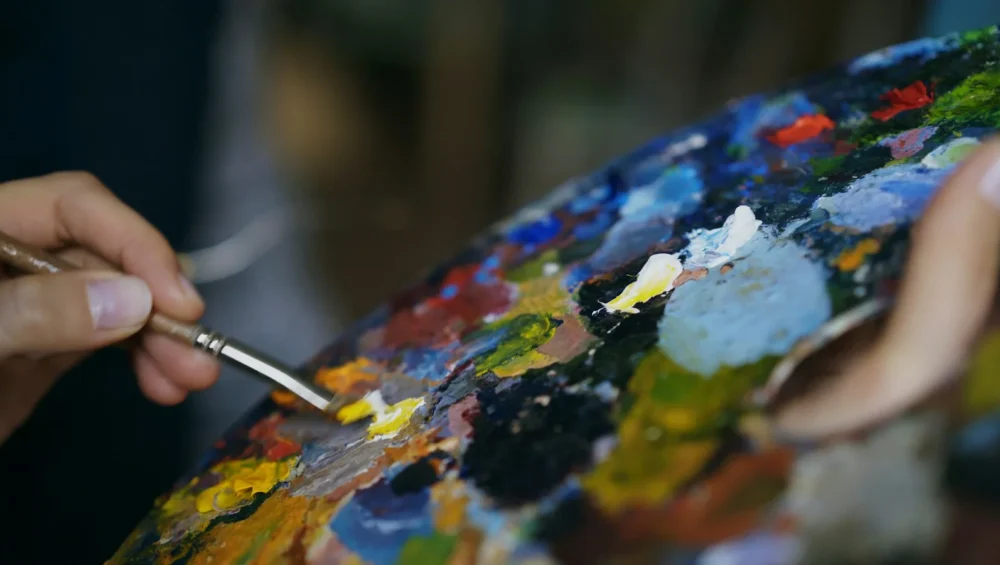
To use acrylic paint, squeeze a small amount onto a palette, load a synthetic brush, apply the paint in thin, even layers to a clean and dry surface, and wash the brush with soap and water before the paint dries. Acrylic is a water-based paint, so it thins and cleans up with water while it is wet, but it resists water once it has dried. This guide from Decent Stationery in Lahore explains how to use acrylic paint from the first brushstroke to the final cleaning, with plain notes on drying time, thinning and colour mixing.
Key Takeaways
- Acrylic paint is pigment held in an acrylic polymer emulsion, with water as the carrier, according to Wikipedia.
- Thin layers of Galeria acrylic dry in 10 to 20 minutes and thick layers can take an hour or more, says Winsor & Newton.
- Artists Network advises against thinning acrylics with more than about 30 percent water.
- Rinse brushes while you work and wash them with soap and water after each session. Never let paint dry on the bristles.
- Acrylic paint usually looks a little darker once it has dried, so test a colour before committing to it.
What Is Acrylic Paint and Why Is It Good for Beginners?
Short answer: Acrylic paint is a fast-drying paint made of pigment suspended in an acrylic polymer emulsion, and it needs only water for thinning and cleaning.
Wikipedia describes water as the vehicle and the acrylic polymer as the binder. While the paint is wet, water thins it and washes it from brushes. After it dries, the film becomes water-resistant. Wikipedia also notes that oil paints need hydrocarbon solvents for cleaning, whereas wet acrylic comes off with water.
Winsor & Newton states that acrylic works on most surfaces, as long as they are not greasy or too glossy. If you are still deciding between acrylic and oil, our guide to acrylic vs oil paint sets out the differences in drying time, cleaning and cost.
What You Need Before You Start
Short answer: A few tubes, two or three brushes, a surface, a flat palette and a water pot are enough.
Jackson’s Art suggests starting with a few tubes, some brushes and a canvas, and learning the plain paint before adding mediums.
| Item | What to choose | Why |
|---|---|---|
| Paint | A small set of basic colours | Fewer colours keep a first project simple (Jackson’s Art) |
| Brushes | Synthetic brushes in a flat and a round shape | Artists Network calls synthetic fibres the best choice for acrylic. Jackson’s Art describes flats for clean rectangular marks and rounds for dots and lines |
| Surface | Canvas, canvas board, heavy paper or a wood panel | Acrylic needs a surface that is not greasy or too glossy (Winsor & Newton) |
| Palette | A flat, water-resistant palette | Artists Network advises against wooden palettes, which absorb water |
| Water pot | One jar or brush washer | Used for rinsing brushes while you work (Jackson’s Art) |
| Cloth or newspaper | An old rag and sheets of newspaper | Jackson’s Art suggests old newspaper or cardboard to protect surfaces |
The Acrylic Paint Set 6 Colors 75ml at Decent Stationery contains six 75 ml tubes in blue, dark green, red, yellow, white and black, which is a workable starting palette for mixing.
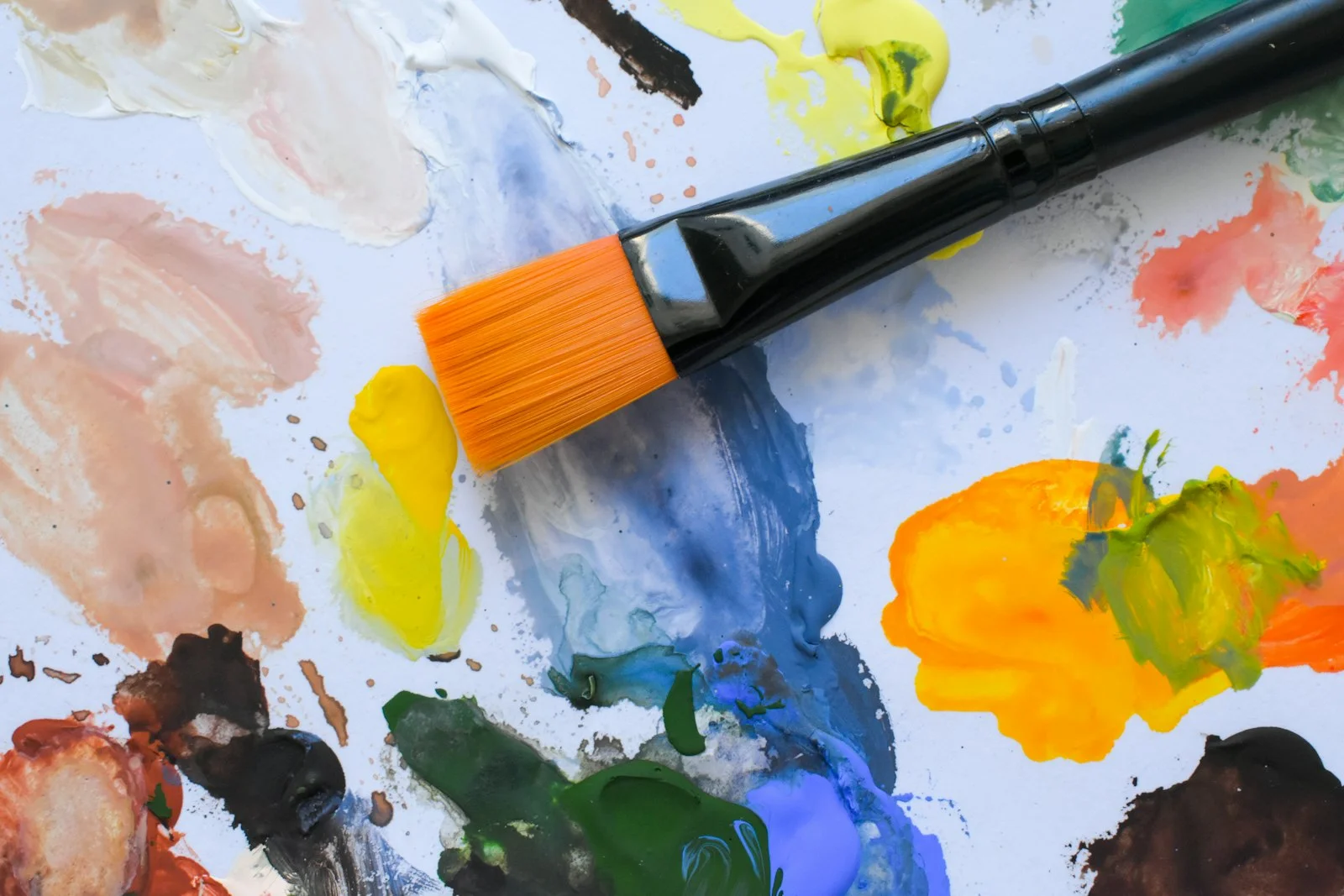
How to Use Acrylic Paint Step by Step
Short answer: Protect your table, prepare the surface, squeeze out a little paint, work in thin layers from large shapes to small details, let each layer dry, and clean your tools straight away.
- Protect the workspace. Cover the table with newspaper and wear old clothes or an apron, because dried acrylic is hard to remove.
- Prepare the surface. Wipe off dust. Jackson’s Art advises beginners to use ready-prepared surfaces and to test a few types to see which they prefer.
- Squeeze out small amounts. Put out only as much paint as you can use in a few minutes. Thin films of acrylic can dry in 10 to 20 minutes, according to Winsor & Newton.
- Match the brush to the paint. Artists Network says stiff brushes suit thick paint and soft, supple brushes suit thinned paint.
- Paint the largest areas first. Cover the background in thin, even coats, then add smaller shapes and details on top.
- Let each layer dry. Wait until the surface no longer feels cool or tacky before adding another coat. This is a practical rule of thumb and not a sourced figure.
- Rinse and clean. Wipe excess paint from the brush with a cloth, rinse it in water, and wash it with soap before you stop.
Thinning, Mixing and Layering Acrylic Paint
How much water can you add to acrylic paint?
Short answer: Add no more than about 30 percent water.
Artists Network states that acrylics should not be thinned with more than about 30 percent water, because too much water leaves pigment without enough binder to form a stable paint film. If you want a thinner, more transparent paint, Jackson’s Art points to fluid mediums, glazing mediums and thinners, which increase flow and transparency and may change the sheen. Winsor & Newton adds that mediums should be used sparingly with the paint.
How do you mix colours?
Short answer: Mix small amounts on the palette, adding the darker colour to the lighter one a little at a time.
With red, yellow, blue, white and black you can make a wide range of other colours, and Jackson’s Art mentions a six-colour primary palette as a standard way to learn mixing. A sheet of white paper under a glass palette helps you judge the true colour of a mix, according to Jackson’s Art. Artists Network says most brands can be intermixed, although properties such as gloss may change.
Can you paint one layer over another?
Short answer: Yes, once the first layer is dry.
Because acrylic dries so quickly, Artists Network notes that wet-into-wet blending is more difficult, while scumbling and dry-brush work suit it well. Winsor & Newton warns that acrylic painted over oil will not adhere properly.
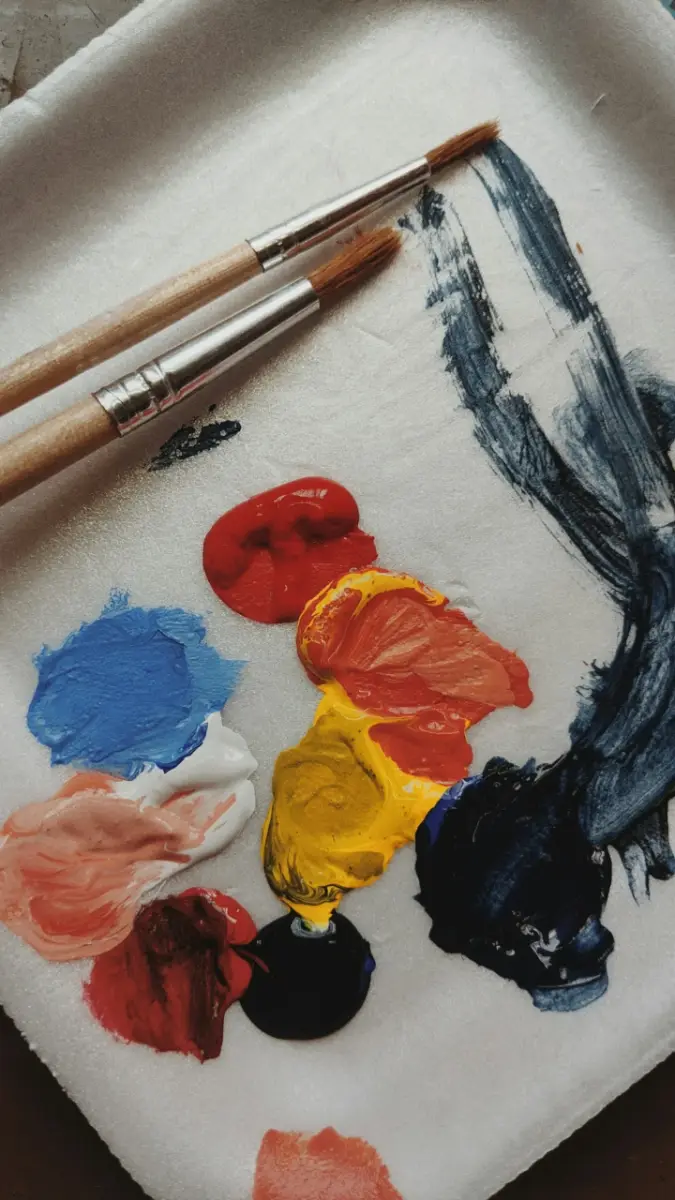
How Long Does Acrylic Paint Take to Dry?
Short answer: A thin layer usually dries in about 10 to 30 minutes, but a thick layer can take hours and may take months to cure completely.
The figures differ a little between brands and depend on the room, as Winsor & Newton notes that times vary with environmental conditions.
| Source | Paint or layer | Thin layer | Thick layer |
|---|---|---|---|
| Winsor & Newton | Galeria Acrylic | 10 to 20 minutes | An hour or more |
| Winsor & Newton | Professional Acrylic | 20 to 30 minutes | An hour or two |
| Wikipedia | Acrylic paint in general | 10 to 20 minutes for one to two layers | Not stated |
| Artists Network | Any acrylic | A film forms in minutes | May take months to dry completely |
Winsor & Newton also explains that paint usually darkens as it dries, because the binder changes from white to transparent. Its Professional range is designed to reduce this colour shift. If you need more working time, Jackson’s Art suggests an acrylic retarder or open acrylics, which dry more slowly. Artists Network also advises waiting several months before applying a final varnish.
Cleaning Brushes, Palettes and Spills
How do you clean acrylic paint from brushes?
Short answer: Rinse the brush in water as you work, then wash it with soap and water at the end of the session.
Artists Network recommends exactly this, and adds that you should not let acrylic dry on your brushes. Jackson’s Art suggests wiping off excess paint before washing, and notes that soap also conditions the bristles and helps them keep their shape.
What if the paint has already dried?
Short answer: Dried acrylic usually cannot be dissolved again, so scrape or soak it off a palette and avoid it on clothes and brushes.
Wikipedia says dry acrylic paint is generally non-removable from a solid surface to which it has adhered, and that water and mild solvents do not re-dissolve it. Artists Network says dried paint on a palette can be removed by scraping or peeling it off, or by letting the palette soak in water.
Using Acrylic Paint at Home and School in Pakistan
For school art projects and home practice, a small set is enough, and the six-tube set mentioned above covers the basic colours. Younger children may find a ready-made kit easier, such as the Kids DIY Paint & Craft Stationery Set, which includes six paint tubes, pre-drawn colouring sheets with pony and unicorn designs and a daisy-shaped mixing palette.
In a warm room, paint on the palette will set sooner, so squeeze out small amounts. Browse our range of acrylic paint in Pakistan online. If you plan to decorate cloth, a paint made for the purpose is the usual choice, and our fabric paint collection is the place to look. For a wider view of paints, brushes and canvases, read our fine art supplies guide for artists in Pakistan. For a more transparent paint, see how to use watercolor tubes.
Frequently Asked Questions
No. Acrylic can be used straight from the tube. Water only helps the paint flow, and Artists Network advises keeping it to about 30 percent or less.
Yes, though heavy paper works best. Jackson’s Art describes acrylic painting paper as sturdier and less absorbent than cartridge or watercolour paper.
It becomes water-resistant. Wikipedia states that most acrylics become water-resistant when dry.
No. Artists Network states that oils and water-based acrylics cannot be mixed because they are chemically incompatible.
Start with red, yellow, blue, white and black, and add others later. Jackson’s Art recommends starting with only a few tubes and learning the unmodified paint before adding mediums.
Conclusion
Acrylic paint rewards a few simple habits. Use thin layers, keep the water to about 30 percent or less, match the brush to the paint, and clean your tools before the paint dries. The next step is a practice sheet on which you mix each colour with white and let it dry to see how it changes. When you are ready to buy paint, brushes or a first set, visit Decent Stationery and browse the range.
Related Reading
Sources and Further Reading
- Winsor & Newton, An introduction to acrylic painting
- Winsor & Newton, Acrylic paint: drying times, colour shift and how to extend working time
- Jackson’s Art Blog, Acrylic painting for beginners: what you need to get started
- Artists Network, What every artist should know when learning how to paint with acrylics
- Wikipedia, Acrylic paint
About the Author
Written by the Decent Stationery team in Lahore, Pakistan. We supply art materials, school stationery and craft supplies, and we write plain guides that draw on the manufacturers, suppliers and publications linked above.