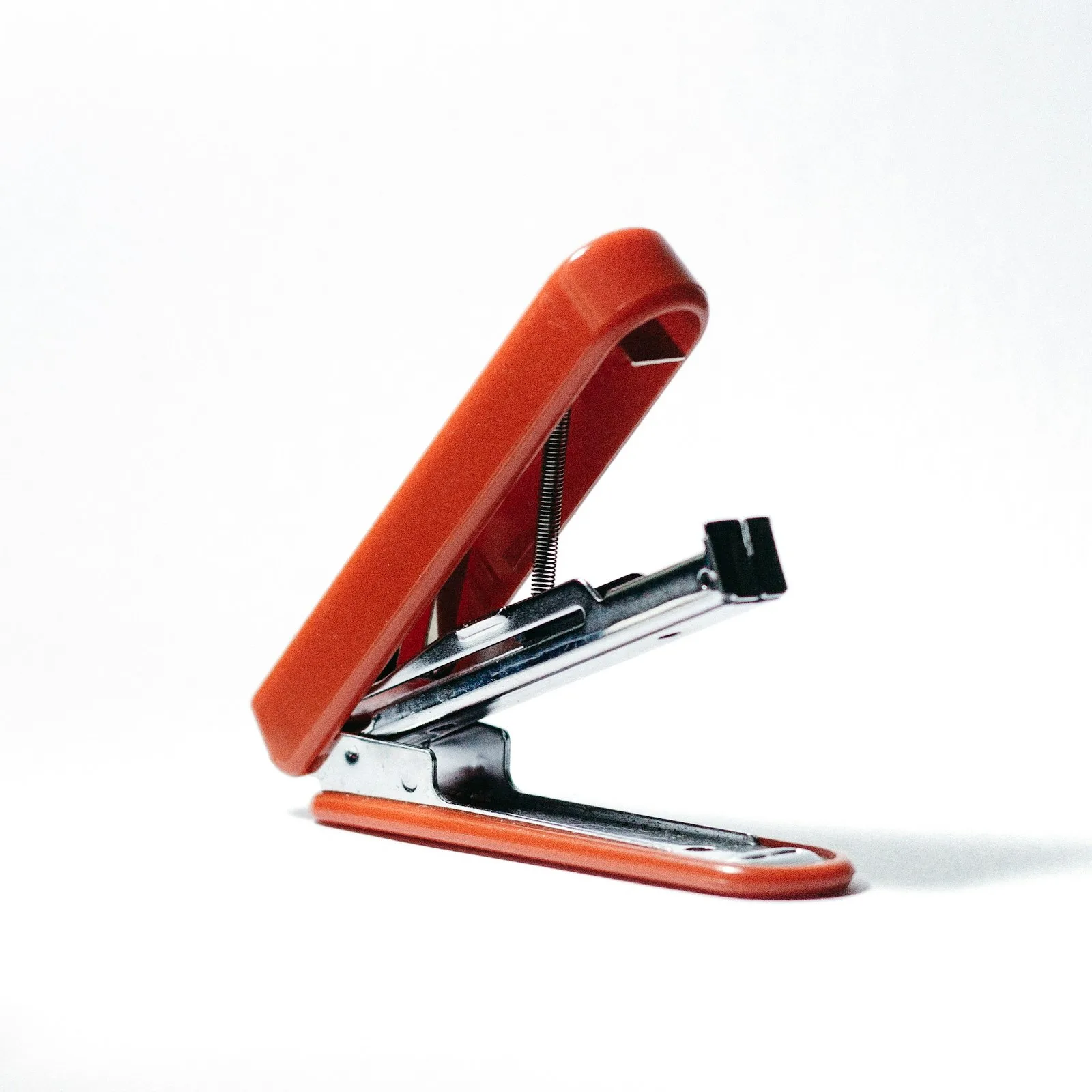
Here is how to put staples in a stapler. Lift the top arm to open the magazine, slide a strip of staples into the channel with the points facing down, close the arm, and press down firmly to fire a test staple on scrap paper. Heavy-duty models load through a release clip or a rear slide. This guide from Decent Stationery explains each type in order, then shows how to choose the right staples and clear a jam.
Key Takeaways
- Open the stapler, clear the tray, slide in one full strip, close it, and test it on scrap paper.
- A standard stapler takes the strip with the points facing down. Check the manual for your own model.
- Heavy-duty staplers load through a release clip or a rear slide, so follow the method for your model.
- The staple size must suit the stapler. Oversized staples jam it and undersized staples may not fasten.
- Never staple more sheets than the stated capacity and keep your fingers away from the arm.
What You Need Before You Load a Stapler
Gather a box of staples made for your model, a sheet of scrap paper for testing, and a can of compressed air if the tray looks dusty. If you are stocking a whole desk, our essential office supplies checklist for small businesses in Pakistan lists the other items worth keeping beside it.
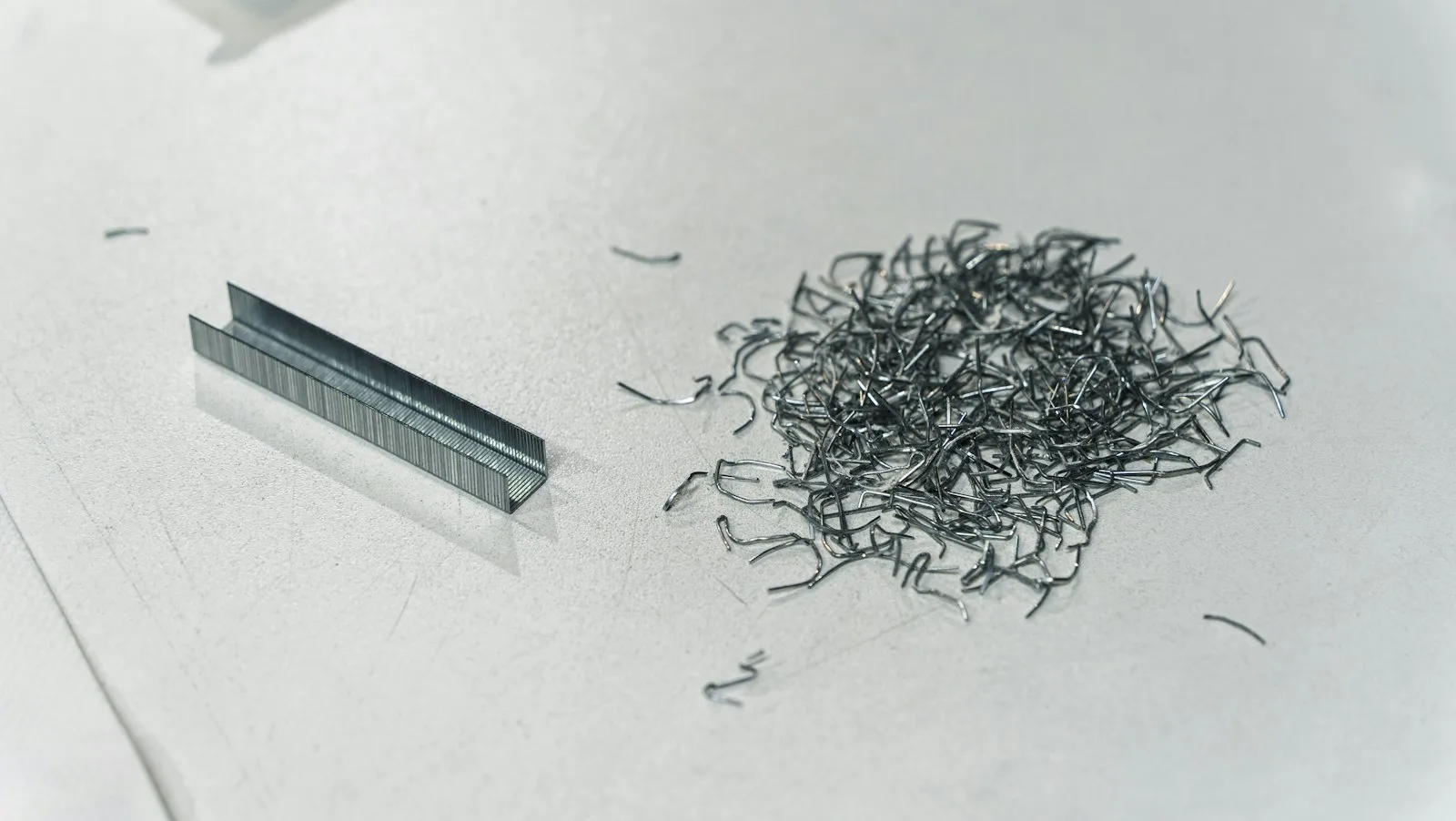
Staples are sold as strips. Wikipedia explains that modern paper staples are zinc-plated steel wire, glued together and bent into a long strip, and that a full strip commonly holds 210 staples.
Which Type of Stapler Do You Have?
Short answer: look at how it opens. A hinged top arm means a standard model. A release clip or a rear slide means a heavy-duty one.
| Stapler layout | How it opens | How the staples go in |
|---|---|---|
| Standard top-load (Small Business Chron) | Lift the top arm on its hinge | Slide the strip into the tray with the points down |
| Heavy-duty with a follow block (Small Business Chron) | Press the release clip at the rear of the base and pull the follow block out | Place the strip in the tray with the prongs down, then push the follow block back until it clicks |
| Rear-slide heavy-duty (Blue Summit Supplies) | Push in and up at the back until the slide pops out | Load the staples onto the slide with the tops facing up, then push the slide back in flush with the rear |
How to Put Staples in a Standard Stapler
Short answer: hold the base, open the top arm, clear the tray, slide in the strip with the points down, close the arm, and test.
Step 1: Open the top arm
Hold the base steady with one hand and lift the top arm with the other. Small Business Chron says to lift the top arm over the metal carrying tray to expose it. The same source warns never to put your hand beneath the arm while the stapler is in use.
Step 2: Clear the tray
Small Business Chron recommends clearing debris and old staples with compressed air.
Step 3: Slide in the staple strip
Take a strip from the box and slide it into the tray with the points facing down, then push it all the way to the front. Designs differ between makers, so check the manual if you are unsure. Load a full strip and not single staples, since Hunker notes that loose staples are likely to jam.
Step 4: Close the arm
Lower the arm over the tray and press until it settles into place.
Step 5: Make a test staple
Press down firmly on a scrap sheet. Small Business Chron advises a test staple at this point, and Hunker suggests one or two.
How to Put Staples in a Heavy-Duty Stapler
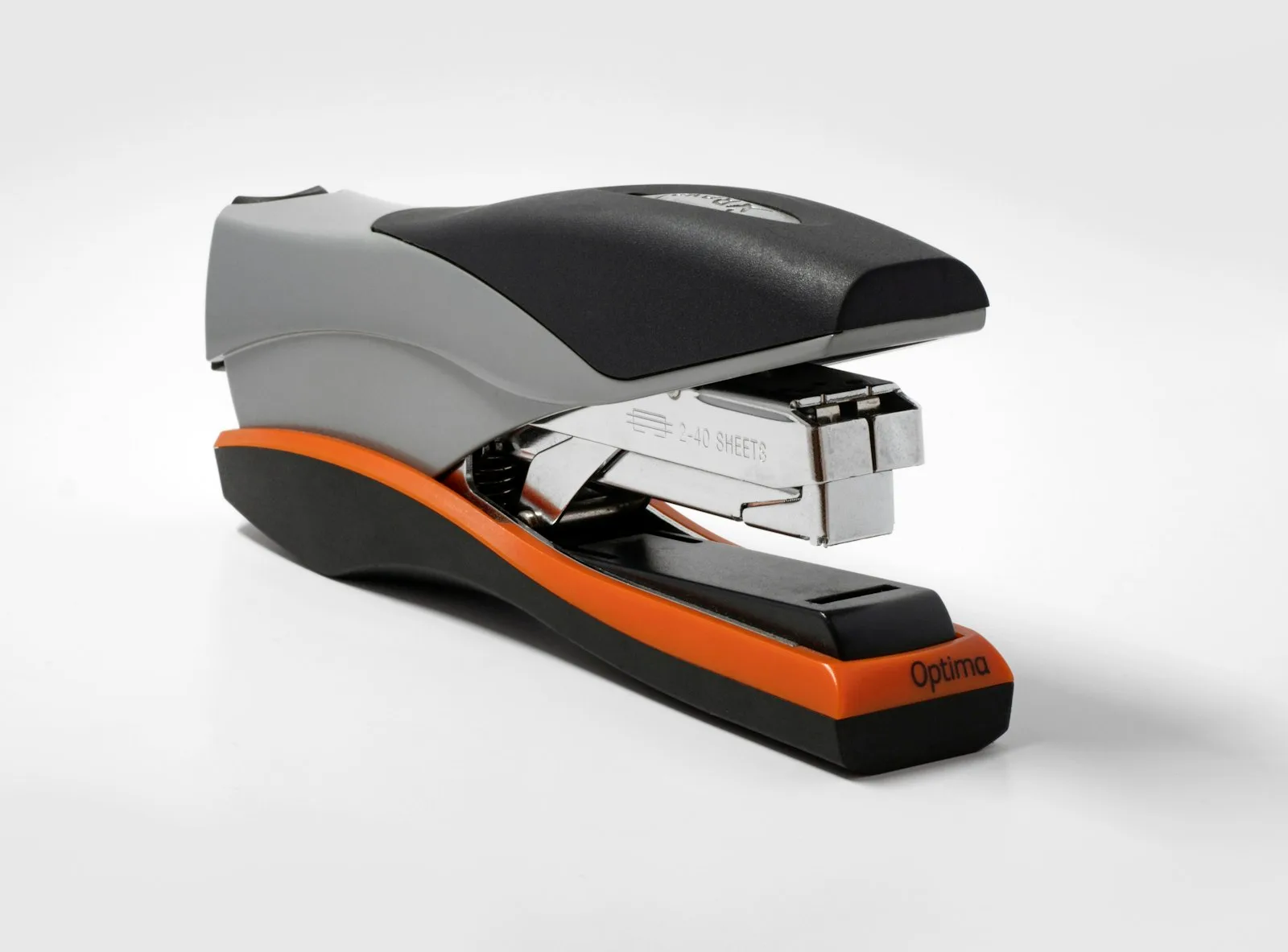
Short answer: release the follow block or the rear slide, load the heavy-duty staples as your model directs, and lock the mechanism back in place.
Heavy-duty staplers load differently from desktop models, and the method depends on the design. Small Business Chron lists the steps for a model with a follow block. First press the release clip at the rear of the base and pull the follow block out of its cradle under the arm. Clear the tray with a few bursts of compressed air. Place a heavy-duty strip in the tray with the prongs facing down. Push the follow block back until it clicks into place and finish with a firm test staple.
Blue Summit Supplies publishes instructions for a rear-slide model rated for up to 240 sheets. You place the stapler on a flat surface, push in and up at the back until the slide pops out, and pull it out. You then load the staples onto the slide with the tops facing up, push it back until it is flush with the rear, and press up so the hooks catch the stapler. It warns that quick motions on the lever arm make jams more likely.
Choosing the Right Staples for Your Stapler
Short answer: read the size code on the staple box and the stapler, and match them.
Staple sizes are labelled with two numbers, written X/Y. According to Wikipedia, X is the wire gauge and Y is the leg length in millimetres, although a few sizes such as No. 10 do not follow this pattern. The common home and office sizes it lists are 26/6, 24/6, 24/8, 13/6, 13/8 and No. 10, which is used in mini staplers.
Can I use any staples in any stapler?
No. Wikipedia states that there are few standards for staple size, length and thickness, which has led to many incompatible systems. It adds that staples from one manufacturer may or may not fit another manufacturer’s unit. Small Business Chron adds that the wrong gauge causes trouble in both directions, because oversized staples can jam the stapler and undersized ones may not load properly or may slip through without doing the job.
How Many Sheets Can You Staple at Once?
Short answer: only as many as your stapler is rated for.
Bostitch Office gives 20 or 40 sheets as examples of a stapler’s maximum and names stapling more sheets than that as a cause of jams. It also names tough materials such as cardboard as a problem for an office stapler.
What to Do When a Stapler Jams After Loading
Short answer: stop pressing, open the stapler fully, remove the stuck staple with a tool, and reload a clean strip.
Bostitch Office and Eco Electronix give a similar order of work, summarised below.
- Do not keep stapling in the same spot, as Bostitch Office advises.
- Open the stapler completely so that the top and bottom are in a horizontal line, then give it a light shake to see whether the staple falls out (Bostitch Office).
- Look into the channel for bent or misaligned staples. Eco Electronix suggests a flashlight for dark corners and a gentle tap of the base on a hard surface, which may loosen or realign the staples.
- If it is still stuck, staple one sheet of paper to see whether it pushes the jam out (Bostitch Office).
- Free the stuck staple with a pencil or a paper clip (Bostitch Office), or with needle-nose pliers or tweezers (Eco Electronix). Bostitch Office never recommends putting your fingers into the unit.
- Reload one strip of the correct size and fire one or two test staples, as Hunker suggests.
To take old staples out of a document, a pin remover is made for the job. See our range of pin opener in Pakistan.
Practical Notes for Offices and Schools in Pakistan
Staplers in a school or a busy office are used all day, so a few habits help. Keep a spare box of the correct staples beside each stapler. Teach children to keep their fingers clear of the arm, and supervise the first few staples when they work on school projects such as the ones in our guide on how to make flash cards for kids. If you need a new stapler or fresh staples, you can shop stapler & stapler pins online from Lahore. To fix paper to a board without binding it, our Notice Board Pins are an alternative.
Frequently Asked Questions
In a standard desktop stapler the strip goes into the tray with the points facing down, according to Small Business Chron. Some models differ, so check the manual for yours.
No. Wikipedia notes that staples from one manufacturer may or may not fit another manufacturer’s unit. Small Business Chron adds that oversized staples can jam a stapler and undersized ones may slip through without fastening.
It depends on the model. Bostitch Office gives 20 or 40 sheets as examples of a maximum. Read the capacity on your own stapler or its box.
Eco Electronix lists bent or misaligned staples, dust and debris, the wrong staple size, mixed brands, overloading, and slamming the stapler down instead of using steady, even pressure. Clear the channel and reload one clean strip of the correct size.
A full strip. Hunker advises against loading single staples, because loose staples are likely to jam.
No. Bostitch Office advises against putting your fingers into the unit. Use a pencil, a paper clip or pliers to free the stuck staple.
Conclusion
Putting staples in a stapler is quick once you know your model. Open the arm or release the mechanism, clear the tray, slide in one full strip with the points down, close it, and fire a test staple. Match the staple size to the stapler, respect the sheet capacity, and stop at the first sign of a jam. For your next step, check the size code on your stapler, and then visit Decent Stationery to find staples that fit it.
Sources and Further Reading
- Small Business Chron: How to Load Bostitch Staplers
- Bostitch Office: How to Unjam a Stapler
- Wikipedia: Staple (fastener)
- Blue Summit Supplies: Loading Instructions for a Heavy Duty Stapler
- Hunker: How to Fix a Jammed Heavy-Duty Stapler
- Eco Electronix: Office Guide to Unjamming a Stapler
About the Author
Written by the Decent Stationery team in Lahore. We sell school, office and art stationery online across Pakistan, including staplers and stapler pins. Loading steps and figures in this guide come from the manufacturers, retailers and reference pages linked above.