Key takeaways: Flash cards work because they force active recall rather than passive review, a memory technique with real research support. A 2013 study out of Kent State University found that repeated self-testing helped students remember material roughly twice as well as simply re-reading notes. Making flash cards for kids at home needs almost nothing beyond index cards or chart paper offcuts, a marker, and about ten to fifteen minutes of daily practice. Below is a step-by-step method, subject-specific card ideas, and a short comparison of card formats.
Why Flash Cards Still Work for Kids
Flash cards are one of the oldest study tools still in wide use, and research keeps confirming why. The mechanism is called the testing effect: actively trying to recall an answer strengthens memory far more than passively reading it again. A 2013 study from Kent State University found that students who tested themselves repeatedly, the way flash cards force you to, remembered material about twice as well as students who only reviewed their notes. The University of Arizona’s Thrive Center has also pointed to research by Roediger and Karpicke showing that active recall helps move information from short-term into long-term memory more reliably than rereading.
For younger children, the appeal is practical as much as scientific. Flash cards are quick to make, easy to carry, and can be adapted to almost any subject, from the alphabet and colors to multiplication tables and vocabulary in a second language.
What You Need to Make Flash Cards at Home
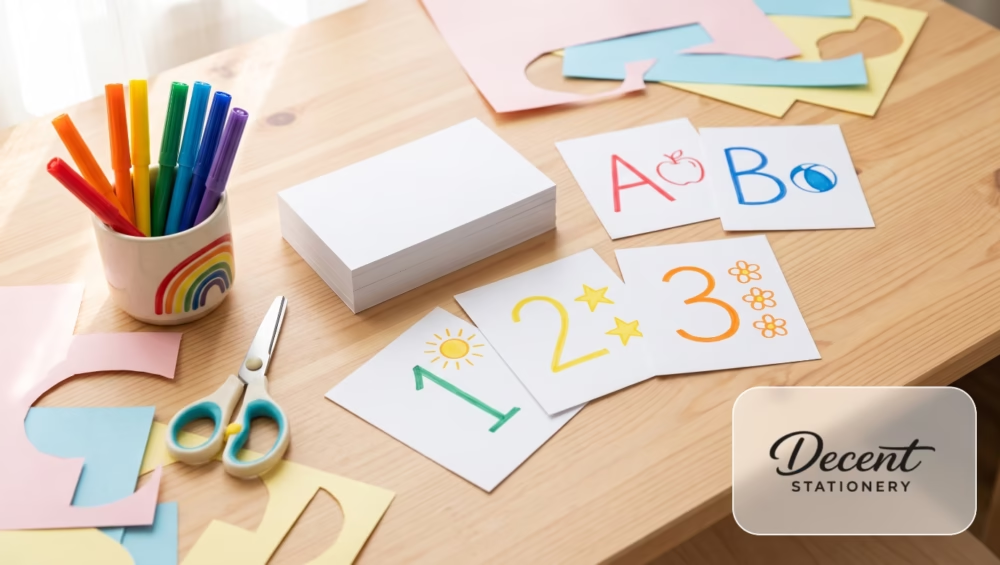
- Index cards, or chart paper cut into small rectangles
- Sketch pens or markers, ideally in a few colors
- A ruler for consistent card sizes if cutting your own
- Stickers or small printed pictures for younger children
- A rubber band or small box to keep finished sets organized
You can find pre-cut index cards and chart paper for cutting your own sets in our flash cards. Pair them with study aids from our binding transparent sheet collection and blackboard and chalk collection.
Step-by-Step: How to Make Flash Cards for Kids
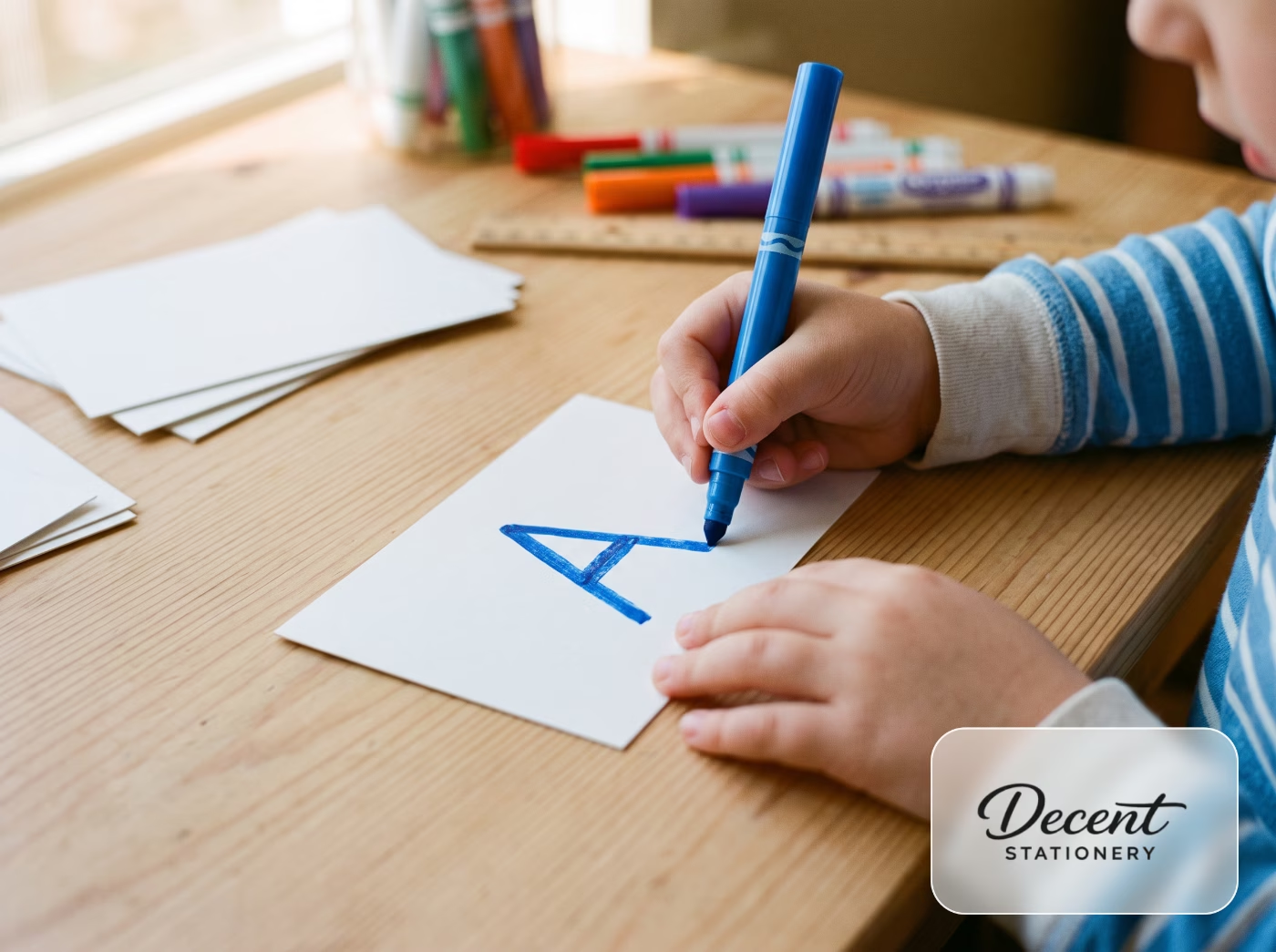
1. Pick One Idea Per Card
Resist the urge to put more than one fact, word, or question on a single card. A card with a single clear idea is easier for a child to test themselves against, and easier for you to shuffle and reuse across different practice sessions.
2. Keep Text Large and Simple
For younger children especially, write in large, clear letters. If the child is still learning to read, pair the word with a small picture rather than relying on text alone.
3. Use the Front for the Question, the Back for the Answer
This sounds obvious, but a common mistake is putting too much explanation on the answer side. Keep the answer short. If the child needs to understand a process, not just memorize a fact, add a small diagram rather than a paragraph.
4. Let the Child Help Make Some Cards
Research from Brainscape’s academy notes that children remember material better when they are involved in creating the cards themselves, whether that means drawing the picture side or writing the answer. It also makes the activity feel like a game rather than a chore.
5. Practice in Short, Regular Sessions
Ten to fifteen minutes a day is enough for most children, and shorter, more frequent sessions tend to work better than one long weekly review. Spacing sessions out over days, rather than cramming, is what researchers call spaced repetition, and it is one of the more consistently supported study techniques.
6. Rotate Cards as Topics Are Mastered
Once a child consistently gets a card right without hesitation, retire it or move it to a less frequent review pile, and bring in new cards to keep the practice challenging.
Flash Card Ideas by Subject
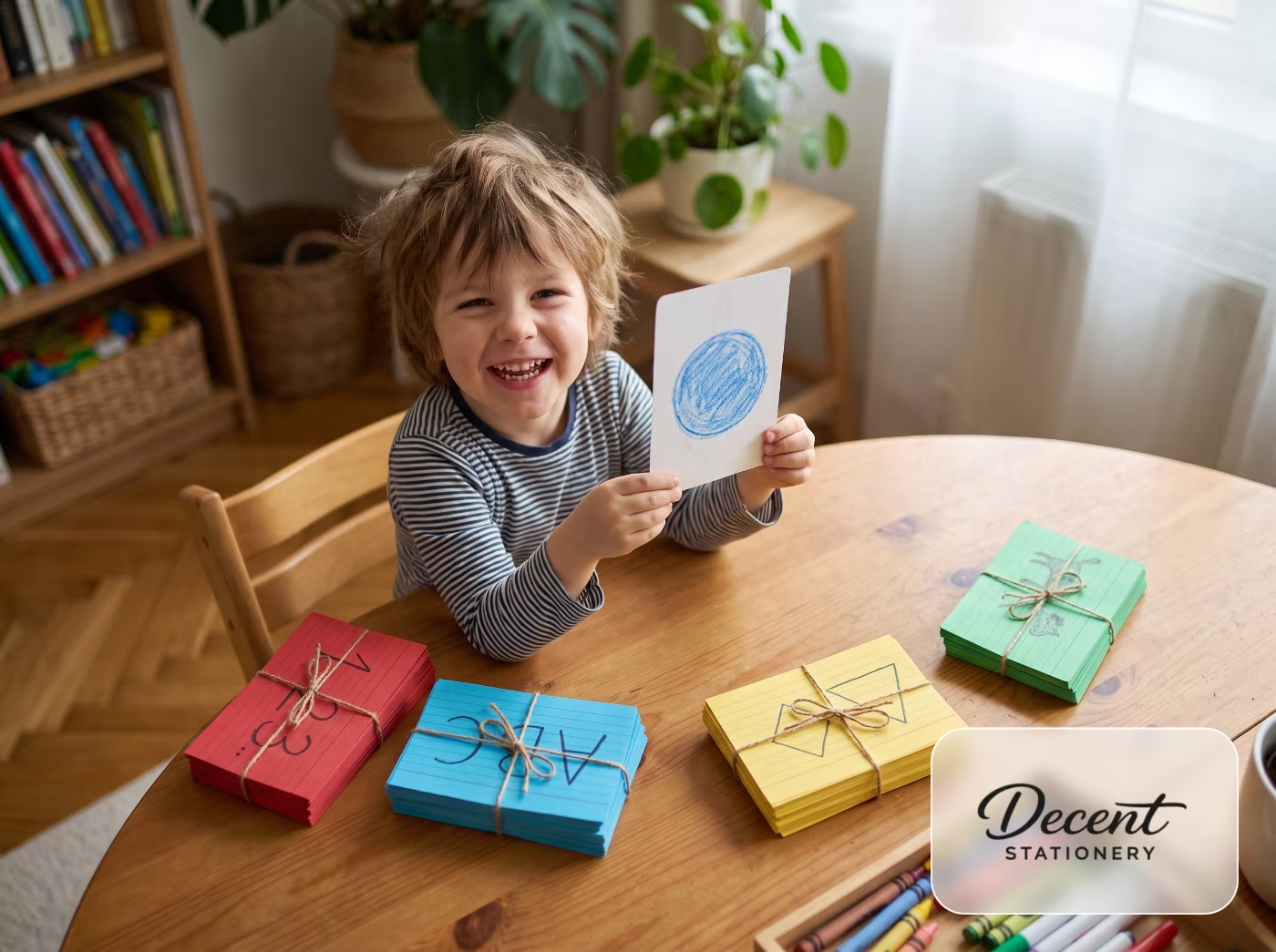
| Subject | Card Format | Tip |
|---|---|---|
| Alphabet and phonics | Letter on front, picture starting with that letter on back | Use bright colors to hold attention for younger kids |
| Basic math | Equation on front, answer on back | Add a small picture illustrating the numbers for early learners |
| Vocabulary or new language | Word on front, translation or picture on back | Keep to one word per card, not full phrases |
| Sight words | Word only, no picture | Helps build fast recognition without decoding each time |
Common Mistakes to Avoid
The most common mistake is overloading a single card with too much information, which turns a quick recall exercise into a mini-essay. The second is skipping the shuffle. Reviewing cards in the same order every time lets children memorize the sequence rather than the actual answers. Shuffle the deck before each session so recall is genuinely being tested.
Frequently Asked Questions
What age can kids start using flash cards?
Picture-based flash cards can work with children as young as two or three, using images rather than text. Text-based flash cards generally work better once a child is starting to read.
How long should a flash card session last?
Ten to fifteen minutes is generally enough. Short, frequent sessions tend to work better than long, infrequent ones.
Is it better to buy flash cards or make them at home?
Both work. Homemade cards have the added benefit of involving the child in the creation process, which research suggests can improve how well they remember the material.
What materials do I need to make flash cards?
Index cards or chart paper, a marker, and a ruler if you are cutting your own cards to size. Stickers or printed pictures help for younger children who are not yet reading.
Where can I buy flash card supplies in Pakistan?
Index cards and chart paper suitable for making flash cards are available through our flash cards collection.
Conclusion
Flash cards remain effective for a simple reason: they force active recall instead of passive review, and that difference is backed by real research, not just tradition. Making a set for a child at home costs very little and takes only a few minutes, and involving the child in creating the cards tends to make the practice stick better. Keep each card to one idea, keep sessions short and regular, and rotate cards as topics are mastered.
Sources: Kent State University research on self-testing and retention, cited by Immerse Education; Roediger and Karpicke research on active recall and the testing effect, cited by the University of Arizona Thrive Center via School Zone; Brainscape Academy on flash cards for kids.